



 Camera Basics
 Camera Choosing
 Camera Models
 Camera Buying
 DSLR Buying
DSLR Lens Selection
NOTE: The contents of this article has been superceeded by the more complete DSLR Lens Buying Guide.
A quick look at available lenses shows that there are far more lenses to chose from than DSLR cameras, yet there is a lot less information about them. Most people know by now that kit lenses only get you so far, if anywhere at all. Here we discuss how to create a personalized set of lens. Remember, those are not the only possibilities, so feel free to adapt those to your needs.
Remember that photographs are taken by a whole camera system, including the photographer. A weak link negatively affects the end-result. A poor camera, a poor lens or poor photography skills all result in disappointing pictures. The most frequent mistake of first-time DSLR buyers is to spend most of their budget on a camera body and then buy the only lens that still fits the budget - or worst, the kit lens. The first rule for choosing lenses is to allocate enough money. As it goes for choosing a digital camera, the two most important things to consider are your subjects and your medium.
Lets start with the practical. How frequently are you willing to change lenses? Are willing to do it in the field? The less you are willing to change lenses on location, the more generic your chosen lens will have to be. This often results in some compromise on image quality or versatility. One who does not want to change lenses, should not get more than one. Having too many lenses results in many of them left behind.
Are weight and size important? Too heavy lenses often end-up left behind too. The second rule is to think of how many lenses are you willing to have. Even without a single heavy lens, choosing too many results in higher total weight in the field. Bulk may be equally important for certain environments. Watch out, based on your needs, you may have to exceed the number of lenses you want to have.
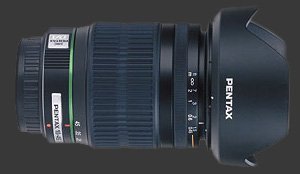
Next comes the needs. Needs vary in terms of angle of view, maximum aperture and other features like stabilization, tilt-shift, magnification and focus distance projection. Angle-of-view requirements translate into different focal lengths due to different sensor sizes. Examples here are quoted for the most common crop factors of 1.5 or 1.6. The equivalent need for full-frame DSLR cameras is noted as a tool-tip.
Think about the widest and narrowest angle desired angle of view. This is a personal choice. Some people always want a wider angle-of-view and some people always want to zoom further. If you already have a DSLR and lens, think about how often you are at the widest setting and wished to go wider because you cannot back up further. How about at the long end, how often do you feel the need to get closer? With a 1.5 crop, wide-angle requires 19 mmRoughly equivalent to 28 mm in 35 mm terms or less. Lenses starting from between 24 and 28 mmEquivalent to between 36 and 42 are mostly satisfactory. Ideally, portrait are taken with an 60 to 80 mm lensFrom 90 to 120 in 35 mm equivalence. Distant subjects and wildlife are easier to photograph with 200+ lenses.
Lenses also vary according to maximum aperture. A wider aperture means less depth-of-fieldConsequently a more blurry background and more light gatheringConsequently faster shutter-speeds. Remember that lenses are generally sharpest 2-stops down from their widest. An F4 lens is normally sharpest around F8, while a F2.8 lens around F5.6. An important feature is optical stabilization. It is an available on some lenses. Digital SLRs with built-in stabilization like the Sony Alpha and most Pentax K-series are advantaged since they obtain stabilization on all lenses at no additional cost. Most importantly, image quality varies tremendously between lenses. More expensive lenses are generally of higher quality than cheaper ones of similar specifications.
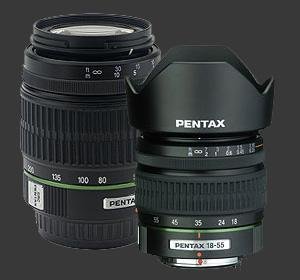
A set of one lens can be very light and fast to use since lens changes are not required. On the other hand, single lenses with long-zoom ranges are of limited quality and have narrow maximum apertures. Here are various single lens kits:
Canon
|
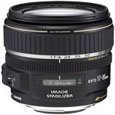
Stabilized wide-to-medium Canon 17-85 F4-5.6 IS USM 
|
|
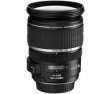
Stabilized open wide-to-medium Canon 17-55 F2.8 IS USM
|
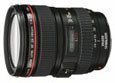  |
Stabilized normal-to-medium Canon 24-105 F4 IS USM |
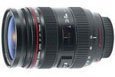  |
Open normal-to-medium Canon 24-70 F2.8 USM |
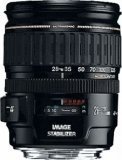  |
Stabilized normal-to-medium Canon 28-135 F3.5-5.6 IS USM |
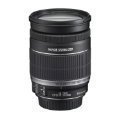  |
Stabilized wide-to-tele Canon 18-200 F3.5-5.6 IS |
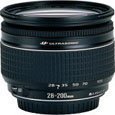  |
Normal-to-tele Canon 28-200 F3.5-5.6 |
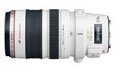  |
Stabilized normal-to-tele Canon 28-300 F3.5-5.6 IS |
Pentax
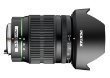  |
Wide-to-medium
|
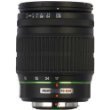 
|
Wide-to-medium
|
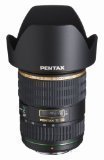 
|
Open wide-to-medium
|
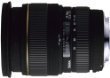  |
Open normal-to-medium
|
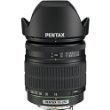 
|
Wide-to-tele
|
Sony
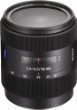 
|
Wide-to-medium
|
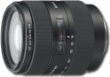 
|
Wide-to-telephoto
|
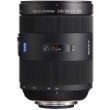 
|
Open normal-to-medium
|
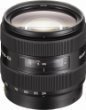 
|
Normal-to-telephoto
|
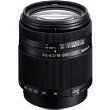 
|
Wide-to-telephoto
|
Nikon
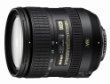 
|
Stabilized wide-to-medium
|
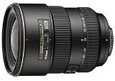  |
Open wide-to-medium
|
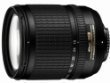 
|
Wide-to-telephoto
|
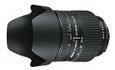 
|
Open normal-to-medium
|
|
Stabilized normal-to-telephoto
|
|
Open normal-to-medium
|
|
Stabilized wide-to-telephoto
|
With two lenses instead of one, it is easier to cover a wider-range of focal lengths or to cover a similar range with higher quality optics. Of course, the hassle is carrying both lenses and having to swap them. Swapping lenses in the field can be minimized by matching each lens to a different subject. This reduces the risk of getting dust on the camera sensor.
Several wide lenses exist to complement medium lenses. One can be chosen either to complement a quality medium lens or a regular medium-to-tele lens. A lens ending with a medium focal length can be paired with a telephoto lens for extending your reach without compromising quality at medium focal lengths. Here are some good lens pairs:
Canon
|
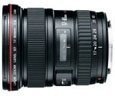
Open wide-to-medium Canon 16-35 F2.8Canon 24-70 F2.8
|
|
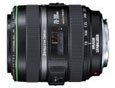
Wide-to-medium Canon 17-40 F4Canon 24-105 F4 IS |
  |
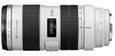
Stabilized wide-to-tele Canon 17-85 F4-5.6 ISCanon 70-300 F4.5-5.6 IS |
  |
Open medium-to-tele Canon 24-70 F2.8Canon 70-200 F2.8
|
Pentax
|
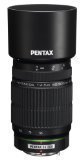
Wide-to-telephoto Pentax 17-70 F4 SDMPentax 55-300 F4-5.6
|
|
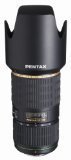
Open wide-to-tele Pentax 50-135 F2.8 SDM
|
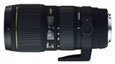  |
Open normal-to-tele Sigma 24-70 F2.8
Sigma 70-200 F2.8
|
Sony
|
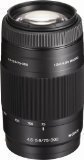
Wide-to-telephoto Sony 16-105 F3.5-5.6Sony 75-300 F4.5-5.6
|
|
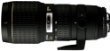
Normal-to-telephoto Sony 24-105 F3.5-4.5Sigma 100-400 F4
|
|
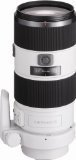
Open normal-to-tele Sony 24-70 F2.8 Carl Zeiss
Sony 70-200 F2.8 SSM
|
Nikon
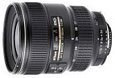  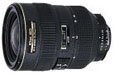 |
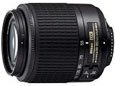
Open wide-to-medium Nikon 17-35 F2.8Nikon 28-70 F2.8 |
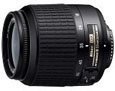    |
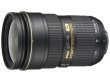
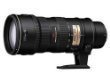
Wide-to-tele Nikon 18-55 F3.5-5.6Nikon 55-200 F4-5.6 |
|
Open normal-to-tele Nikon 24-70 F2.8
Nikon 70-200 F2.8 VR
|

 Equipment Articles
Please Support Neocamera
All information on Neocamera is provided free of charge yet running this website is a huge endeavor. Purchases made via affiliate links found throughout the site help keep it running and up-to-date. There is no additional cost to you, so please consider buying via these links to our affilates:




Thank you for your support!


Ultra-Wide Angle Lenses
While many general purpose digital lenses start at wide-angles, none are truly ultra-wide lenses. An ultra-wide lens adds an unusual perspective to images, one that does not approach human vision. Note that no ultra-wide lens is stabilized. Thus, stabilizing an ultra-wide lens requires a camera with built-in stabilization. The widest ultra-wide lenses for 1.5X or 1.6X crop sensors start at 10mm, although 12mm is more common start. For full-frame sensors, Sigma has a 12-24mm which gives the widest field-of-view. The next widest field of view come from the Nikkor 14-24 F2.8 full-frame lens and the Zuiko 7-14 F4 Four-Thirds lens.
Updates
2026.09.08

The Wild Magic of Iceland Book Review
Review of The Wild Magic of Iceland by Norris Niman. A photographic journey through seasons.
2026.07.31

ZY Optics Pittura 30mm F/2.4 Medium-Format Lens Review
The ZY Optics Pittura 30mm F/2.4 is a manual lens designed exclusively for Medium-Format Digital Cameras. This fast prime lens captures a wide field-of-view, equivalent to a 24mm on Full-Frame. It is am affordable alternative to first-part GFX and XCD lenses.
2026.07.26

Fujifilm GFX100S II Review
Express review of the Fujifilm GFX100S II. This 102 MP Medium-Format Mirrorless Digital Camera packs an 5-Axis 8-Stop IBIS and a 5.8 MP 0.5" EVF showing 100% coverage at an extra-large 0.84X magnification. It is a more compact version of the flagship GFX100 II. This review covers exactly how these camera compare.
2026.07.14

Sony Alpha A7R VI Review
Extended In-Depth Review of the Sony Alpha A7R VI. This flagship Full-Frame Mirrorless Digital Camera combines ultra-high 67 MP resolution with very fast 30 FPS continuous shooting. It packs a 5-axis 8½-stop IBIS mechanism and an ultra-sensitive 759-Point Phase-Detect AF system. Its incredibly sharp 9.4 MP 0.64" EVF has a huge 0.9X magnification, 100% coverage, 10-bit HDR and 100% DCI-P3 color-space. Captures 8K video at 30 FPS or 4K video at 120 FPS.
2026.05.21

Laowa 4.5-10mm F/2.8 Fisheye Zoom Lens Review
In-depth review of the Venus Optics Laowa 4.5-10mm F/2.8 Fisheye Zoom Lens. This lens zooms from a circular to rectangular fisheye with an 180° viewing angle. This review analyses its optical quality, construction and handling.
2026.04.13

Laowa 17mm F/4 Zero-D Shift Review
In-Depth review of the Venus Optics Laowa 17mm F/4 Zero-D Shift Lens. This ultra-wide Shift lens is specifically designed for Mirrorless Digital Cameras and is available in 4 Full-Frame mounts plus 2 Medium-Format ones.
2025.11.13

Best Gifts for Photographers in 2025 by Budget
The annual Neocamera Photography Gift Guide updated to 2025. Find great gifts for photographers with any price budget.
2025.07.07

Stellar Photo Recovery Review
Review of Stellar Photo Recovery V12. This Windows and MacOS software can recover photos and videos in a huge number of formats from memory cards, USB drives, SSDs and HHDs.
2025.05.14

Huion Kamvas 13 Gen 3 Review
In-Depth review of the Huion Kamvas 13 Gen 3 Pen Display Tablet for photographers and graphic artists.
2025.01.18

Fujifilm GFX 2025 Lens Roundup
Lens Review roundup of Fujifilm GFX Medium-Format lenses. Quality, performance and handling of the GF20-35mm F/4R WR, GF30mm F/3.5 Tilt-Shift and the GF55mm F/1.7.
2024.11.18

Best 2024 Photography Gifts for Every Budget
Great gifts for photographers and photo enthusiasts selected for every budget among the best products of 2024.
2024.08.07

Eye Protection Tips for Professional Photographers
The four main considerations for professional photographers regarding eyewear.
2026.09.08
2026.07.31
2026.07.26
2026.07.14
2026.05.21
2026.04.13
2025.11.13
2025.07.07
2025.05.14
2025.01.18
2024.11.18
2024.08.07
Camera Bag


Your camera bag is empty. To add a camera or lens click on the star next to its name.
Your camera bag is empty.
Add cameras or lenses by clicking on the star next to their name.
NEWS
2026.10.14

Sony Launches High-Resolution Audio Wireless Microphone
Audio ○ sony
2026.09.27

Nikon Introduces First Compact Full-Frame Mirrorless
Digital Camera
2026.09.16
Canon Increments R8 to Mark II
Digital Camera
2026.09.15

Sony Launches Super-Telephoto GMaster Lenses
Lens
2026.09.09
OM Systems Relaunches PEN
Digital Camera
2026.09.08
Sony Reveals First Fisheye Zoom Lens
Lens
2026.09.04
Fujifilm Launches New 400mm Prime Lens
Lens
2026.08.10

Peak Design Launches City Line Bags
Bag
2026.08.04
Sony Launches Light Super-Telephoto Full-Frame Zoom Lens
Lens
2026.07.31
Venus Optics Creates Two Parfocal Ultra-Macro Lens
Lens
2026.07.31
ZY Optics Pittura 30mm F/2.4 Medium-Format Lens Launch and Review
Lens ○ Review
2026.07.26
Fujifilm GFX100S II Review Published
Digital Camera ○ Review

