



 Camera Basics
 Camera Choosing
 Camera Models
 Camera Buying
 DSLR Buying
 Lens Buying Guide - Choosing
Ground Rules
Here are the top five rules to follow when buying one or more lenses. Those who just landed here can go see Step 1 of this Lens Buying Guide to learn about lenses and what the important terms mean.
 The first rule for buying lenses is having enough budget. If all you can afford is the kit lens, you paid too much for your camera. A lens has a far greater impact on photography than the camera, so buying a cheaper camera to get better lenses is a great strategy. Good lenses are rarely cheap.
 A lens is only useful if you take it places. Size and weight have to be seriously considered when buying lenses. Very heavy lenses are difficult to use far from a vehicle and most often require a strong tripod to be used effectively. Many small lenses can quickly add up to a heavy load.
 Interchangeable lens cameras are vulnerable to dust when changing lenses, which can ruin all shots until the camera can be cleaned. Think about how often you are willing to change lenses and do not plan to do it under harsh weather.
 Compromise is unavoidable. One can pay more for quality or versatility but rarely both. High quality zooms have short ranges, rarely exceeding a 4X ratio. High-powered zoom lenses compromise on image quality. Prime lenses equality vary in quality, better ones are heavier and more expensive.
 Lenses are an investment and a commitment to a particular mount. A suitable set of lenses normally exceeds the price of the camera and quickly become a deciding factor when upgrading. Lenses most often increase in value over time until a significant change in technology.
Focal Range & Subjects
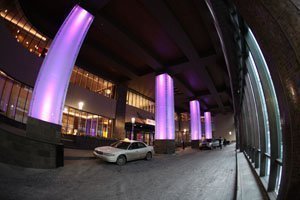 Just like choosing a camera, choosing a lens requires consideration for your photographic subjects first. This is a personal choice and is related to the way you see things that attract you as subjects. Even for the same subject, certain people will prefer different lenses. For example, architecture photography is most often done with a very wide-angle lens but people who are more attracted to architectural details prefer a longer lens.
The focal-lengths needed are determined by the size of your subjects and the distance between you can them. Large subjects such has monuments and sweeping landscapes therefore need wide-angle lenses. Portraits are most often done with medium lenses to give a flattering perspective and not crowd your subjects too much. Distant subjects like birds and wild animals require very long lenses. Think about the focal-lengths you use the most and also how often do you reach the limits of your current set of lenses, if you already have some.
TIP Some programs like Adobe Photoshop Lightroom can help by displaying the focal-lengths of your images. An interesting exercise is to first find which focals you use the most and then find out the ones used to capture your highest rated images.
The angle-of-view given by a focal-length depends one sensor size, so people should really think more about the angle but for historical reasons people most often speak in terms of 35mm-equivalent focal-length, so take into consideration the intended camera when choosing focal-lengths.
It may take several lenses to cover all the desired focal-lengths, particularly if high image quality is desired. No need to buy all the lenses at once but better buy lenses thinking about the whole set. For occasional use, there are lens rental services in some areas. However, these are mostly available for Canon and Nikon lenses so far.
Prime vs Zooms
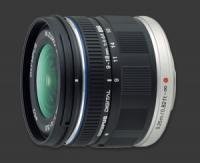 Zoom lenses clearly provide flexibility while framing, particularly when the photographer's movements are limited. They also often cover the focal-lengths of several prime lenses, which reduces the needs to change lenses and risk exposure the camera sensor to dust. For single lens kits, a zoom is therefore much more common than a prime.
Prime lenses can reach much wider apertures than zoom lenses of the same focal-length. Particularly, other than these 2 models from Olympus, no zooms reach wider than F/2.8. For obtaining strong background blur, a prime is lens is essential. True macro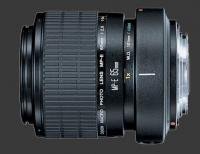
Canon MP-E 65mm F/2.8 1-5X Macro lenses are only available as prime lenses, as are tilt-shift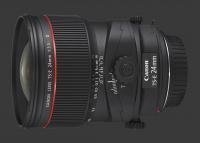
Canon TS-E 24mm F/3.5L II and most specialty lenses. Short prime lenses can be made very small and light, which is desirable for certain types of photography.
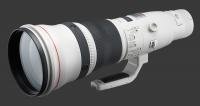 The quality question comes up regularly. It is now widely known that modern zooms can be of equal or superior quality than prime lenses in the same range. Among low-lost lenses however, prime lenses are still often better than zooms. For high-quality lenses, there is no longer a clear winner and it must be evaluated on a case-by-case basis. In the end, most photographers end up with both prime and zoom lenses in their collections.
Photography in low-light often tests the limits of a camera system, making it difficult to meter and focus. A lens with a wide maximum aperture greatly helps because it lets more light in for a proper exposure while keeping ISO reasonable. Another important factor with DSLRs is that focusing is always done with the lens wide-open, so even if the picture is taken at a small aperture, the brighter lens will be at an advantage while focusing.
To shoot in extremely low-light, ISO can be increased or shutter-speed can be lowered. Stabilization greatly helps making slow shutter-speeds usable but they are of little relevance in the presence of moving subjects. Remember though that stabilized prime lenses are rare and to count on stabilization at very wide apertures it is certainly better to use a camera with built-in stabilization.
Filters
Filters can be added to most lenses, either in front on at the back, to affect the light coming in. There are a huge variety of filters but most of them are no longer necessary now that digital filters can be applied using image processing software. The most important exception is the polarizing filter which cannot be simulated by software since it not only affects colors but also removes reflection and glare. Software has no way of knowing what was behind a reflection.
The most commonly encountered filter is the UV filter which stores sell to boost their profits under the pretext that it protects the lens. Actually, it does but at the detriment of image quality. This is mostly visible as ghosts and flares when bright lights are present in the frame. The best advise is to use one only when the lens is in eminent danger such as in the presence of salt-water or flying sand, unless you know yourself to be accident-prone with gear. Replacing a filter is cheaper than replacing lenses.
Filters attach to the front using a filter-thread which is measured in millimeters. Very wide lenses usually lack this thread, so some accept smaller slip-in filters at the rear. Make sure you buy the correct type and size of filter for your lenses. You can use a larger filter using a step-ring which saves money by removing the necessity of buying filters in various sizes. The only gotcha is that using a step-up ring prevents the use of a lens hood.
Specialty Lenses
 Rectilinear are normal lenses that show straight lines as straight lines. Normal lenses are rectilinear. They are designed to show straight lines as straight lines.
Specialty lenses produce different images. Here are the most common types:
 Fisheye lenses produce an image where most straight lines appear curved. They have an extremely wide angle-of-view, up to 185° and come in two varietiesExcept one model from Canon which can do both: Circular fisheye lenses produce a circular image while rectangular ones produce a rectangular images.
- Tilt lenses can tilt their front element to produce an image where the focus-plan is not parallel to the camera sensor. This allows for creative effects such as achieving an extremely deep depth-of-field on a flat surface such as a wall or floor.
- Shift lenses can shift their front element to control perspective, that is why they are sometimes called Perspective Control lenses. By keeping a camera level and using a shift lens to adequately frame a tall subject, the subject show much less keystoning which makes buildings appear as they are leaning.
 3D lenses are designed to capture stereoscopic images which give the impression of 3D when viewed on a suitable device. The image captured is not normally directly viewable and needs to processed into a pair of images which is used to produce the stereoscopic effect.
 Back to Lens Basics
Please Support Neocamera
All information on Neocamera is provided free of charge yet running this website is a huge endeavor. Purchases made via affiliate links found throughout the site help keep it running and up-to-date. There is no additional cost to you, so please consider buying via these links to our affilates:




Thank you for your support!


Camera Bag


Your camera bag is empty. To add a camera or lens click on the star next to its name.
Your camera bag is empty.
Add cameras or lenses by clicking on the star next to their name.
New Cameras & Lenses

Venus Optics Laowa 4.5-10mm F/2.8 Fisheye Zoom
Sony E Mount Zoom
2026-05-15Venus Optics Laowa 4.5-10mm F/2.8 Fisheye Zoom
Nikon Z Mount Zoom
2026-05-15Venus Optics Laowa 4.5-10mm F/2.8 Fisheye Zoom
Micro Four-Thirds Mount Zoom
2026-05-15Venus Optics Laowa 4.5-10mm F/2.8 Fisheye Zoom
Leica L Mount Zoom
2026-05-15Venus Optics Laowa 4.5-10mm F/2.8 Fisheye Zoom
Fujifilm X Mount Zoom
2026-05-15Venus Optics Laowa 4.5-10mm F/2.8 Fisheye Zoom
Canon RF Mount Zoom
2026-05-15
Updates
2026.05.21

Laowa 4.5-10mm F/2.8 Fisheye Zoom Lens Review
In-depth review of the Venus Optics Laowa 4.5-10mm F/2.8 Fisheye Zoom Lens. This lens zooms from a circular to rectangular fisheye with an 180° viewing angle. This review analyses its optical quality, construction and handling.
2026.04.13

Laowa 17mm F/4 Zero-D Shift Review
In-Depth review of the Venus Optics Laowa 17mm F/4 Zero-D Shift Lens. This ultra-wide Shift lens is specifically designed for Mirrorless Digital Cameras and is available in 4 Full-Frame mounts plus 2 Medium-Format ones.
2025.11.13

Best Gifts for Photographers in 2025 by Budget
The annual Neocamera Photography Gift Guide updated to 2025. Find great gifts for photographers with any price budget.
2025.07.07

Stellar Photo Recovery Review
Review of Stellar Photo Recovery V12. This Windows and MacOS software can recover photos and videos in a huge number of formats from memory cards, USB drives, SSDs and HHDs.
2025.05.14

Huion Kamvas 13 Gen 3 Review
In-Depth review of the Huion Kamvas 13 Gen 3 Pen Display Tablet for photographers and graphic artists.
2025.01.18

Fujifilm GFX 2025 Lens Roundup
Lens Review roundup of Fujifilm GFX Medium-Format lenses. Quality, performance and handling of the GF20-35mm F/4R WR, GF30mm F/3.5 Tilt-Shift and the GF55mm F/1.7.
2024.11.18

Best 2024 Photography Gifts for Every Budget
Great gifts for photographers and photo enthusiasts selected for every budget among the best products of 2024.
2024.08.07

Eye Protection Tips for Professional Photographers
The four main considerations for professional photographers regarding eyewear.
2024.07.14

Fujifilm X100VI Review
Flagship fixed-lens compact digital camera with a 40 MP sensor and Image-Stabilization, a first for the series. Retro design featuring dual control-dials, plus direct ISO, Shutter-Speed and EC dials. Its hybrid viewfinder can switch between EVF and OVF mode.
2024.05.09

Fujifilm GFX100 II Review
Flagship 102 Megapixels Medium-Format Mirrorless Digital Camera with 8-Stop 5-Axis IBIS, 8 FPS Drive, 8K Video and 400 MP Super-Resolution capture in a weatherproof and freezeproof body with dual control-dials and dual memory-card slots.
2024.04.03

Fujifilm X-T5 Review
Newest Fujifilm flagship boasting a 40 MP APS-C sensor, 5-axis IBIS with 7-stop efficiency, 15 FPS continuous drive, 6.2K Video capture, dual control-dials and dual SDXC UHS-II slots in a sturdy weatherproof and freezeproof body.
2023.11.20

Best Digital Cameras of 2023
Find out which are the Best Digital Cameras of 2023. All the new Mirrorless Digital Cameras from entry-level to high-end professional.
2026.05.21
2026.04.13
2025.11.13
2025.07.07
2025.05.14
2025.01.18
2024.11.18
2024.08.07
2024.07.14
2024.05.09
2024.04.03
2023.11.20
NEWS
2026.05.13

Sony Levels Up 6th Generation Alpha A7R
Digital Camera
2026.05.13
Canon Launches First Full-Frame Video Mirrorless
Digital Camera
2026.05.12
Panasonic Finally Launches LX100 II Successor
Digital Camera
2026.03.24
Panasonic Launches ZS300 Compact Ultra-Zoom
Digital Camera
2026.03.10

Venus Optics Unveils Ultra Wide Perspective Control Lens Duo
Lens
2026.02.24
Nikon Release Lighter Bright Constant-Aperture Full-Frame Telephoto Zoom Lens
Lens
2026.02.05
Canon Introduces 2 Extreme Wide Full-Frame Lenses
Lens
2026.01.06
Nikon Introduces Lightweight Full-Frame Zoom Lens
Lens
2025.12.02
Sony Upgrades Alpha 7 to 5th Generation
Digital Camera ○ Lens
2025.11.29
Venus Optics Releases New Zero-D Tilt-Shift Macro Lens
Lens
2025.11.23
Best Digital Cameras of 2025
Digital Camera
2025.11.14

Photography Gift Guide 2025 Edition

