



 Camera Basics
 Camera Choosing
 Camera Models
 Camera Buying
 DSLR Buying
 Digital Camera Buying Guide - Choosing
Digital Camera Choosing
Keep reading this page to learn how to Choose a Digital Camera. To learn about basic digital camera concepts, head back to Digital Camera Basics which is the first step in our 4-step Digital Camera Buying Guide.
The Medium
Paying attention to megapixels is only important now if you intend to make truly large prints. Resolution determines the maximum print size which can be made from a single image without degrading image quality. All modern digital cameras have at least 12 megapixels which is more than enough for a 12" x 18" print.
It is critical to get enough megapixels for a desired print size. Otherwise, printed images will appear unsharp. Getting significantly more megapixels than needed may degrade image quality though due to increased image-noise. Unfortunately, consumers are rarely given the opportunity to choose fewer megapixels.
For uses other than prints, so few megapixels are needed that there is little point checking if a new camera has enough megapixels. It always does. Even the highest-resolution HDTV never requires more than 2 megapixels. The highest resolution computer monitor currentlyIBM used to have one with 9 MP (T221) but it has been discontinued. in production has 4 megapixels.
Since displays and printers produce pictures using tiny dots, giving them more pixels than they use is futile. In other words, the extra pixels are ignored! Look at the following table to see how many megapixels are needed.
| Standard Prints | Large Prints | Other Media | |||||
|---|---|---|---|---|---|---|---|
| 4"x6" | 2MP | 15"x20" | 18MP | 1MP | |||
| 5"x7" | 2MP | 16"x24" | 22MP | General Website | 1MP | ||
| 8"x10" | 5MP | 18"x24" | 24MP | Photo Website | 1MP | ||
| 9"x12" | 7MP | 20"x30" | 34MP | HDTV | 2MP | ||
| 12"x16" | 11MP | 24"x32" | 44MP | 12"-27" Display | 2MP | ||
| 12"x18" | 12MP | 30"x40" | 70MP | 30" LCD | 4MP | ||


Subjects
Different subjects require different things from a digital camera. While all digital cameras manage well with daylight-lit outdoor pictures, other subjects and situations require certain features.
 |
Taking indoor pictures under typical household lighting demands high ISO sensitivity or at least use of a flash. Most photographers use flash because high ISO sensitivities make pictures look rather noisyEven with 35 mm films, high ISO means larger, more visible grain unless a relatively expensive large-sensor camera is purchased. High ISO sensitivities are preferable to preserve the mood of lightingUnless using a tripod for photographing still subjects. and the sense of depth. |
 |
A built-in flash must reach far enough to light a subject completely, otherwise an external flash will be required. In such case you must get a camera with a hot-shoeOr a sync-port for studio-flashes. to connect the external flash. |
 |
Night photography requires slow shutter speeds. Preferably longer than 4 seconds. Control over shutter speed is critical, otherwise it is quite difficult to obtain desired results. |
 |
Sharply photographing moving subjects requires fast speed shutters. For people doing sports you need at least 1/500. For faster subjects such as race cars, horses and speedboats look for a camera with 1/2000 or faster shutter speeds. To ensure a fast shutter speed is obtained a camera must have a shutter priority mode or a fast-shutter subject programSometimes called sport or action mode.. Indoor sports require a camera with high ISO sensitivity which is most likely a DSLR. |
 |
Wildlife photography requires the use of long zoom lenses because most animals don't easily let people get close to them. Even insect photography is better with a long zoom because of their small size. If you intend to photograph wildlife either get an Ultra-Zoom camera (10X or more) or an ILC with a long zoom lens (300mm or longer). |
 |
A continuous drive mode is frequently used to get good pictures of moving subjects. Cameras that have a continuous drive mode take pictures in rapid succession. The number of frames- per-second (FPS) is the number of pictures taken in one second. The burst length is the number of pictures that can be taken consecutively at the maximum frame-rateBefore the camera stops taking pictures or slows down dramatically.. |
 |
Special situations like fireworks, moving light-trails and artistic photography absolutely require having manual controls. A camera with full manual-controls lets the photographer control aperture, shutter-speed and ISO independently. |
Location
To take a picture of a subject, you must have your camera near it. To get it there, you must transport it. This is why it is extremely important to get a camera of the right size. Unfortunately not all features are available in every camera sizeManual controls are rarely found on small cameras, for example. and picture quality is better with a bigger sensor, which usually means a bigger camera and bigger lens.
Camera sizes fall into 6 categories:
- Ultra-Compact: Fit in most pockets and are easy to transport unnoticeably anywhere.
- Compact: Easy to transport, fit in purses and waist-pouches.
- Medium: Too big for the average purse, these can be kept in an small camera bag.
- Large: Definitely too big for a purse, fits in a nap sack or average camera bag.
- Mirrorless: Interchangeable lens cameras which can be Medium size when paired with a slim lens. They can get large with a long or bright lens.
- SLR: Large enough to need a dedicated camera bag, they are easy to notice and may feel heavy to carry over extended periods.
Other location considerations:
 Waterproof - Submersible under water up to a certain depth. Waterproof - Submersible under water up to a certain depth. |
Underwater photography requires a waterproof camera or an underwater camera case. A waterproof camera or case is rated to a certain maximum depth. Most waterproof cameras go deep enough for swimming and snorkeling but not sufficiently for SCUBA diving. For SCUBA diving, an underwater case is always needed. |
 Weatherproof - Seals protect from dust, humidity and light splashing. Weatherproof - Seals protect from dust, humidity and light splashing. |
A few cameras are splash-proof for taking pictures in the rain or in dusty environments. Some are also freezeproof which lets them operated below freezing, usually down to -10C, without a significant change in performance. |
Camera Quality
Some cameras are better than others even if they are the same size and have similar features. There are different aspect to camera quality and even more to image quality:
- Picture quality: Good cameras produce pictures with less noise or other problems such as distortion, chromatic aberrations, blurring, color shift, etc.
- Ergonomics: Well-designed digital cameras are comfortable, easy and efficient to use.
- Build quality: Some cameras are more sturdy than others and will last longer.
- Performance: The speed at which a camera focuses, takes pictures and updates its LCD all affect its usability. Faster subjects are more demanding of camera performance.
When looking at camera models in the next step look for these icons which indicate quality:
 Excellent +
 Excellent
 Good
Good Average
 Poor
Poor
Next
There are a few more choosing basics for completeness in More Choosing Basics or look for digital camera in step 3 of this Digital Camera Buying Guide: Camera Models.
 Choosing Basics
Please Support Neocamera
All information on Neocamera is provided free of charge yet running this website is a huge endeavor. Purchases made via affiliate links found throughout the site help keep it running and up-to-date. There is no additional cost to you, so please consider buying via these links to our affilates:




If you found any information on this site valuable and did not purchase via our affiliate links, please considering donating via PayPal:
Any amount will be greatly appreaciated. Thank you for your support!


Camera Bag


Your camera bag is empty. To add a camera or lens click on the star next to its name.
Your camera bag is empty.
Add cameras or lenses by clicking on the star next to their name.
New Cameras & Lenses
Sony FE 16-25mm F/2.8G
Weatherproof
Sony E Mount Zoom
2024-04-16
Tamron Di III 28-75mm F/2.8 VXD G2
Weatherproof
Nikon Z Mount Zoom
2024-03-28
Sigma A 50mm F/1.2 DG DN
Weatherproof
Sony E Mount Prime Lens
2024-03-27Sigma A 50mm F/1.2 DG DN
Weatherproof
Leica L Mount Prime Lens
2024-03-27
Nikkor Z 28-400mm F/4-8 VR
Stabilization & Weatherproof
Nikon Z Mount Zoom
2024-03-27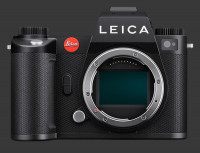
Leica SL3
60 Megapixels Mirrorless
Leica L Lens Mount
Built-in Stabilization
Weatherproof down to -10C
2024-03-07
Updates
2024.04.03

Fujifilm X-T5 Review
Newest Fujifilm flagship boasting a 40 MP APS-C sensor, 5-axis IBIS with 7-stop efficiency, 15 FPS continuous drive, 6.2K Video capture, dual control-dials and dual SDXC UHS-II slots in a sturdy weatherproof and freezeproof body.
2023.11.20

Best Digital Cameras of 2023
Find out which are the Best Digital Cameras of 2023. All the new Mirrorless Digital Cameras from entry-level to high-end professional.
2023.07.10

Fujifilm X-H2 Review
40 Megapixels APS-C Hybrid Mirrorless Digital Camera with 7-stop IBIS. Fastest shutter ever and 8K video capture. Large builtin EVF with 0.8X magnification and 5.8 MP, plus an Eye-Start Sensor. Packed with features and large number of controls in a weatherproof and freezeproof body.
2023.05.07

Sony FE 20-70mm F/4G Review
Review of the unique Sony FE 20-70mm F/4G lens. The optical zoom of this lens spans ultra-wide-angle and medium focal-length coverage, making it one of the most versatile Full-Frame lenses on the market.
2023.01.15

Huion Inspiroy Dial 2 Review
Review of the Huion Inspiroy Dial 2 tablet, a medium sized drawing surface with dual dials and customizable buttons. Connects via USB-C or Bluetooth 5.0 with Windows, Linux and Android support.
2022.12.08

How to Pack for a Photo Trip
Find out how to pack for a travel photography trip, carry your gear safely while meeting airline regulations.
2022.11.13

Best Digital Cameras of 2022
The best digital cameras of 2022. A short list of the most outstanding models in their respective categories. Choose one for yourself or as a gift.
2022.09.21

Pentax DA* 60-250mm F/4 SDM Review
Review of the Pentax DA* 60-250mm F/4 SDM, the constant-aperture telephoto zoom with the highest zoom-ratio on the market.
2022.09.20

Pentax DA* 50-135mm F/2.8 SDM Review
Review of the Pentax DA* 50-135mm F/2.8 SDM, the lightest professional telephoto zoom native to the K-mount.
2022.09.10

Pentax DA* 11-18mm F/2.8 DC AW Review
Review of the Pentax DA* 11-18mm F/2.8 DC AW, the widest professional ultra-wide zoom native to the K-mount.
2021.11.24

50 Gifts Under $50 For Photographers in 2021
50 Gifts photographers will love. All for under $50 USD. 2021 Edition.
2021.11.17

Best Digital Cameras for 2021
Neocamera shows which are the very best Digital Cameras for 2021 in every category: Mirrorless, DSLR, Premium Compact, Ultra-Zoom and Rugged.

