Camera Basics
 Camera Choosing
 Camera Models
 Camera Buying
 DSLR Buying

Fujifilm X-S1 Review
 12 Megapixels
 Ultra-Zoom: At least 10X optical zoom.
 Electronic View Finder
 Stabilization: Compensates for tiny involuntary movements of the camera.
 Level: Measures camera tilt and helps to keep the horizon level.
 Continuous Drive
 Full 1080p HD Video: 1920 x 1080 resolution or more but less than 4K.
 Manual Controls: Both fully-manual (M) and semi-automatic modes (T and V).
 Custom White-Balance: Specifies exactly what should be white to the camera.
 Action Photography: Shutter speeds of 1/1500 or more.
 Night Photography: Reaches shutter-speeds longer than 4 seconds.
 Hotshoe: Allows external flash units to be attached.
 Spot Metering
 Weatherproof - Seals protect from dust, humidity and light splashing.
 Accepts Secure Digital Extended Capacity (SDXC), SDHC and SD memory.
 Neocamera detailed review
 Discontinued: No longer produced by the manufacturer. May still be in stock or found used.
 1 - Capability2 - Usability3 - Performance
Fujifilm X-S1 Introduction


Four years ago, Fuji introduced the Finepix S100FS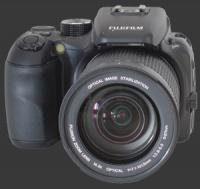
Fujifilm Finepix S100FS, the most sophisticated digital camera of its time and the best performing ultra-zoom ever since. While they made plenty of newer ultra-zooms, the Fuji X-S1 is the first to challenge the S100FS.
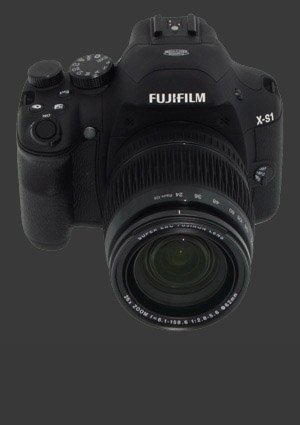
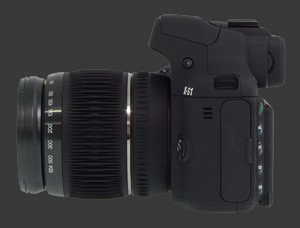
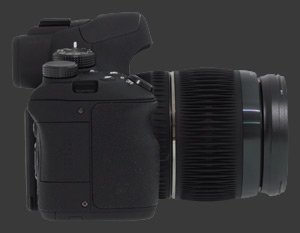
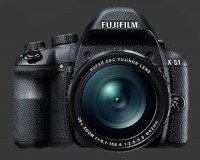
The Fuji X-S1 is a prosumer ultra-zoom built around a larger-than-usual 2/3" CMOS sensor and a mechanicaly-linked ultra-wide 26X optical zoom lens with stabilization built-in. This lens is equivalent to an outstanding 24-624mm, reaching beyond most super-telephoto lenses.
As a premium camera, like other Fuji X-series models, the X-S1 features a full set of manual controls, complete with manual focus, custom white-balance with fine-tuning, bracketing, RAW capability, a hot-shoe and more. The X-S1 is presently the only weather-sealed ultra-zoom.
This digital camera is based on a 12 megapixels BSI-CMOS sensor enhanced with EXR technology. This triple-mode sensor can capture high-resolution, high dynamic-range or low noise images while also supporting high-speed features including full 1080p HD video capture and burst rates up to 7 FPS at full-resolution.
Externally, the X-S1 is a cross between the S100FS and HS20 EXR reviewed here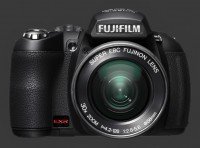
Fujifilm Finepix HS20 EXR. It is nearly the same size as the former but with a control layout similar to the latter which has more direct controls. It is equipped with both a large 3" tilting LCD and large 0.47" EVF with 1.4 megapixels and an Eye-Start sensor.
Fuji X-S1 Key Features
Sensor
- 12 Megapixels 2/3" EXR CMOS sensor
- ISO Range from 100 to 3200 at 12 MP
- ISO 6400 at 6 MP and ISO 12800 at 3 MP
- Auto or set Dynamic Range, 100 to 400%
Resolution Priority (EXR-HR)
- 12 Megapixels
- ISO 100-800
- Auto ISO up to 800
- Fixed 100% Dynamic range
- 1/4s Min Shutter-Speed
Dynamic-Range Priority (EXR-DR)
- 6 Megapixels, Two-Stage Read-Out
- Selectable 100% to 1600% Dynamic Range
- Automatic Dynamic Range up to 1600%
- Auto ISO up to 3200
- 1/4s Min Shutter-Speed
- Flash Disabled
Low-Noise Priority (EXR-SN)
- 6 Megapixels, Binned Read-Out
- ISO 100-3200
- Auto ISO up to 3200
- Fixed 100% Dynamic Range
- 1/4s Min Shutter-Sped
Auto EXR
- Automatic resolution
- Fixed 6 MP or 3 MP resolution
- Auto ISO only
- Auto Dynamic Range only
- Auto Exposure without EC
- Multi-Segment Metering only
- 1/4s Min Shutter-Speed
- Full-Time AF-C only
- Automatic White-Balance only
Lens
- Fujinon 26X ultra-wide optical zoom
- Built-in optical image stabilization
- Equivalent to 24-624mm
- F/2.8 - F/5.6 maximum aperture
- F/11 minimum aperture
- Mechanical zoom
- Fly-By-Wire focus ring
- 1cm minimum focus-distance
Exposure
- 1/4000-30s Shutter-Speed, Plus Bulb
- Multi-Segment, Average & Spot Metering
- Full Manual Controls, 3 Custom modes
- Exposure-Compensation, ±2 EV, 1/3 EV steps
- Flash-Compensation, ±2/3, 1/3 EV steps
- Fixed 1/3 EV steps
Drive & Focus
- 7 FPS Continuous Drive at 12 MP, 8 JPEG / 7 RAW
- 10 FPS Continuous Drive at 6 MP, 18 JPEG
- AEB Bracketing, 3 frames, 1/3-1 EV stops
- ISO Bracketing, 3 frames, 1/3-1 EV stops
- Film-Simulation Bracketing, 3 frames
- Dynamic-Range Bracketing, 3 frames
- Multi-Frame Pro Low-Light & Pro Focus Modes
- Motion Panorama, 120 to 360°
- 2s & 10s Self-Timers
- 49-Area Contrast-Detect autofocus, 5 Sizes
- Auto or Single or Tracking focus-point selection
- Single-Shot, Continuous or Manual Focus
- Face Detection & Recognition
- Optional AF-Assist lamp
Image Parameters
- Auto, Preset, Kelvin and Custom White-Balance
- White-Balance Fine-Tuning, 2-axis, 19-steps
- Provia, Velvia, Astia, B&W, Sepia Film Simulation
- Adjustable Color-Saturation, 5 steps
- Adjustable Sharpness, 5 steps
- Adjustable Highlight-Tone, 5 steps
- Adjustable Shadow-Tone, 5 steps
- Adjustable Noise-Reduction, 5 steps
- JPEG, RAW & RAW+JPEG modes
Video
- HD Video Recording at 1920x1080 @ 30 FPS
- High-speed Video from 70 to 200 FPS
- Built-In stereo microphone
- Stereo input mini-jack
Viewfinder & Display
- 0.47" EVF 1.4 Megapixels
- Tiltable 3" LCD 460K Pixels
- 100% Coverage
- Eye-Start Sensor
- 1-Axis Digital Level
- Monitor Sunshine Boost
Body & Construction
- Weather-sealed construction
- Combined configurable AE-L/AF-L button
- 2 Customizable Function button
- Built-In flash, 8m (W) - 5m (T)
- Hot-Shoe for external lighting
- Metal tripod mount
- 1080i HDMI output
- USB 2.0 connectivity
- SDXC memory card slot
- Proprietary Lithium-Ion battery
Fujifilm X-S1 Suitability - What is it good for?
The Fuji X-S1 is defined by a combination of its unique mechanical lens and a larger-than-usual sensor. The optical zoom range with built-in stabilization covers a huge variety of photographic subjects. The ultra-wide end is perfect for architecture, landscapes and indoor shots. At the other extreme, a long reach of 624mm makes it suitable for wildlife and birding. By contrast, a DSLR would require multiple lenses, weighing several kilos and costing thousands of dollars to cover the same range. Needless to say, other applications are covered: street photography, portraits, sports and more.
The mechanical-link allows precise, smooth and quick framing of subjects. This is truly a pleasure to use on any camera and something that is bound to improve your photography. Having no zoom motor not only saves energy, it also produces virtually silent zooming while filming video.
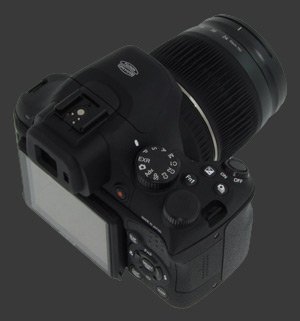
The X-S1 is designed for efficient access to manual controls and offers a large number of buttons to directly control the camera with little use of the menu system. This kind of efficiency makes it usable in a hurry. There is also a fly-by-wire manual focus ring which serves its purpose well.
High-speed features such as 7 FPS drive mode and pre-capture buffering make it more usable than similar cameras for action. The low-light side is covered by a 100 to 3200 full-resolution ISO range which is suitable for most uses. At the extreme of low-light, the X-S1 stops being usable before its peers due to a slowest shutter-speed that is reduced by one stop for each ISO. At ISO 100, exposures can take up to 30s exposures and at ISO 200 that gets reduced to 15s. By ISO 3200, the limit is a paltry 1s. This is probably the case because of noise-characteristics of the CMOS sensor. While there is a Bulb mode, it offers exactly the same limit as manual exposure.
Pictures from the Fuji X-S1 can be printed nicely in sizes up to 16"x12" thanks to 12 megapixels of resolution. At the wide-angle end, the camera can focus as close as 1 cm in super-macro mode. This digital camera allows control over the Dynamic Range it captures. Possible options go from 100% to 1600%, although these are not available at all modes and ISO settings. Increasing dynamic-range may also reduce image quality in shadow areas.
With its enormous zoom range and wide-exposure latitude, plus weather-sealed body, the Fuji X-S1 makes an ideal travel camera. Even DSLR owners can use it as a backup, while photographers searching for an all-in-one solution are will be extremely well-served by the most versatile fixed-lens digital camera to date.
Fujifilm X-S1 Capability - What can it do?
Beyond taking pictures of a huge range of photographic subjects, the Fuji X-S1 packs plenty of useful and interesting features. Here are the most useful ones, followed by explanations when required.
- Expanded Dynamic-Range: 100%-400% at 12 MP in EXR-HR mode, 100%-1600% in EXR-DR mode at 6 MP.
- White-Balance: Auto, PresetDaylight, Shade, Fluorescent 1-3 & Incandescent, Kelvin and Custom, all fine-tunable in 19 steps along 2 axisRed-Cyan and Blue-Yellow.
- Metering: Multi-Segment, Spot and Average.
- Focus Control: Single Autofocus (AF-S), Continuous Autofocus (AF-C), Manual Focus (MF), Face-Detection.
- Autofocus Modes: Center, Multi-pointCamera chooses a point to focus on, AreaUser selects an area to focus on or Tracking.
- Drive Modes: Single, Continous, Best-Shot, AEB, ISO Bracketing, Film-Simulation Bracket, Dynamic-Range Bracket.
- Self-Timers: 2s, 10s.
- PASM Exposure Modes, with Program-Shift and Bulb.
- Exposure compensation: +2 to -2 EV, in 1/3 EV increments.
- Flash compensation: -2/3..+2/3, in 1/3 EV increments.
- Exposure Bracket: 3 shots, 1/3, 2/3 or 1 EV increments.
- Flash Modes: Auto, On, Off, Slow-Sync.
- Sweeping panorama, 120°, 240° or 360°.
- Pro Low-Light Mode, Multi-Frame Noise-Reduction
- Image Parameters: Color, Sharpness, Highlight Tone, Shadow Tone, Noise-Reduction, 5-steps each
- JPEG, JPEG+RAW and RAW capture
The Fuji Finepix X-S1 offers two methods of dynamic range expansion:
One method is available at any resolutions when the camera is neither in EXR-SN nor in EXR-DR mode. This works by using the camera's processor to adjust the tone curve while actually exposing at a lower sensitivity. The consequence is that only a normal dynamic range is obtainable at ISO 100. One can boost the DR to 200% at ISO 200 and up to 400% DR can be captured at higher sensitivities. This gives two more stops of highlight headroom.
The other method, Dynamic-Range Priority (EXR-DR), is unique to EXR sensors and is available at half-resolution (6 MP). In this mode, the sensor uses pairs of adjacent pixels of the same color - which is possible by a special arrangements of the color-filer array - to form a single output pixel by reading one photosite partway during the exposure. This lets photosites be read before they saturate. This is clever trick needs a constant flow of light during exposure and therefore does not work with flash. With this approach the X-S1 can capture up to 1600% dynamic range, so up to 4 extra stops of sensitivity. This lets it reach a Dynamic-Range which is beyond all current cameras.

Color is controllable using Film Simulation and traditional Color (Saturation) and separate Tone (Contrast) control for Shadows and Highlights. The rendition of details is controlled by Sharpness and Noise-Reduction settings. There are 53 steps on each scale, so flexibility is limited but the steps are very gradual. Film Simulation lets the photographer choose between five traditional film looks: Provia, Velvia, Astia, B&W and Sepia. The most natural results are obtained from Astia. White-balance is very flexible. These is an automatic setting, 6 presets, a Kelvin option and a custom setting. All these settings can be fine-tuned along 2 axis in 19 steps, giving tremendously precise control over color-temperature.
Best-frame-capture is a sophisticated mode to capture an ideal frame from continuous action. It starts working as soon as the shutter is pressed halfway, continuously capturing images of which only a few are stored, then adding more images after the shutter is fully pressed. The speed at which it does this is controllable between 3 and 7 FPS at 12 MP or up to 10 FPS at 6 MP. The number of before and after frames is selectable, as long as the total is 8 images at 12 MP or 16 at 6 MP. So one can get 5 images before, 1 image during and 2 image after or 3 images before, 1 during and 4 after, or any other combination which adds up to 8.
The 20 scene modes are divided into a set of 17, a set of 2 and Motion Panorama. Any of the 17 can be accessed by any of the to SP positions on the mode-dial. The next 2 are called Advanced Scene Modes: Pro Low-Light and Pro Focus. Pro Low-Light takes 4 images to combine them into one image with reduced noise. This is similar to what image software call stacking or multi-frame noise-reduction. Pro Focus combines two shots to simulate the background blur associated with fast lenses.
The Motion Panorama mode is designed to capture a panorama continuously in any direction. The sweep angle can be set to 360°, 180° and 120°. The output is limited to 1080 pixels in landscape orientation and 1624 pixels wide in portrait mode, in the shortest dimension, giving at most an 11520 x 1624 panorama. Fuji greatly improved this mode since its early beginnings and the camera is capable of producing a panorama easily.
Now, while Motion Panorama has its issues, most people do not bother properly setting up their camera to manually stitch using a computer later. The trick is to have the patience for plenty of trials and errors. Motion must be steady and the camera kept level. If that sounds easy, it is not. At least the X-S1 stitches whatever it got up to the point where it could not go on. This means that the panorama may stop before the chosen angle-of-view has been swept.

 |



 
|
 Next1 - Capability2 - Usability3 - Performance
Please Support Neocamera
All information on Neocamera is provided free of charge yet running this website is a huge endeavor. Purchases made via affiliate links found throughout the site help keep it running and up-to-date. There is no additional cost to you, so please consider buying via these links to our affilates:




Thank you for your support!


Fujifilm X-S1 Highlights


 Large digital camera
Sensor-Size: 9 x 7mm

Actual size when viewed at 100 DPI
| 12 Megapixels Ultra Zoom | ISO 100-3200 |
| 26X Mechanically Linked Ultra-Wide Optical Zoom | Shutter 1/4000-30s |
| Built-in Stabilization | Full manual controls, including Manual Focus |
| 0.47" Built-in EVF 1.4 Megapixels | Custom white-balance with 2 axis fine-tuning |
| Automatic Eye-Start sensor | Spot-Metering |
| 1 Axis Digital Level | Hot-Shoe |
| Weatherproof | Stereo audio input |
| 7 FPS Drive, 8 Images | Lithium-Ion Battery |
| 1920x1080 @ 30 FPS Video Recording | Secure Digital Extended Capacity, Internal Memory |
| 3" LCD 460K Pixels |
Camera Bag


Your camera bag is empty. To add a camera or lens click on the star next to its name.
Your camera bag is empty.
Add cameras or lenses by clicking on the star next to their name.
Updates
2025.11.13

Best Gifts for Photographers in 2025 by Budget
The annual Neocamera Photography Gift Guide updated to 2025. Find great gifts for photographers with any price budget.
2025.07.07

Stellar Photo Recovery Review
Review of Stellar Photo Recovery V12. This Windows and MacOS software can recover photos and videos in a huge number of formats from memory cards, USB drives, SSDs and HHDs.
2025.05.14

Huion Kamvas 13 Gen 3 Review
In-Depth review of the Huion Kamvas 13 Gen 3 Pen Display Tablet for photographers and graphic artists.
2025.01.18

Fujifilm GFX 2025 Lens Roundup
Lens Review roundup of Fujifilm GFX Medium-Format lenses. Quality, performance and handling of the GF20-35mm F/4R WR, GF30mm F/3.5 Tilt-Shift and the GF55mm F/1.7.
2024.11.18

Best 2024 Photography Gifts for Every Budget
Great gifts for photographers and photo enthusiasts selected for every budget among the best products of 2024.
2024.08.07

Eye Protection Tips for Professional Photographers
The four main considerations for professional photographers regarding eyewear.
2024.07.14

Fujifilm X100VI Review
Flagship fixed-lens compact digital camera with a 40 MP sensor and Image-Stabilization, a first for the series. Retro design featuring dual control-dials, plus direct ISO, Shutter-Speed and EC dials. Its hybrid viewfinder can switch between EVF and OVF mode.
2024.05.09

Fujifilm GFX100 II Review
Flagship 102 Megapixels Medium-Format Mirrorless Digital Camera with 8-Stop 5-Axis IBIS, 8 FPS Drive, 8K Video and 400 MP Super-Resolution capture in a weatherproof and freezeproof body with dual control-dials and dual memory-card slots.
2024.04.03

Fujifilm X-T5 Review
Newest Fujifilm flagship boasting a 40 MP APS-C sensor, 5-axis IBIS with 7-stop efficiency, 15 FPS continuous drive, 6.2K Video capture, dual control-dials and dual SDXC UHS-II slots in a sturdy weatherproof and freezeproof body.
2023.11.20

Best Digital Cameras of 2023
Find out which are the Best Digital Cameras of 2023. All the new Mirrorless Digital Cameras from entry-level to high-end professional.
2023.07.10

Fujifilm X-H2 Review
40 Megapixels APS-C Hybrid Mirrorless Digital Camera with 7-stop IBIS. Fastest shutter ever and 8K video capture. Large builtin EVF with 0.8X magnification and 5.8 MP, plus an Eye-Start Sensor. Packed with features and large number of controls in a weatherproof and freezeproof body.
2023.05.07

Sony FE 20-70mm F/4G Review
Review of the unique Sony FE 20-70mm F/4G lens. The optical zoom of this lens spans ultra-wide-angle and medium focal-length coverage, making it one of the most versatile Full-Frame lenses on the market.
2025.11.13
2025.07.07
2025.05.14
2025.01.18
2024.11.18
2024.08.07
2024.07.14
2024.05.09
2024.04.03
2023.11.20
2023.07.10
2023.05.07