



 Camera Basics
 Camera Choosing
 Camera Models
 Camera Buying
 DSLR Buying
DSLR Viewfinder Sizes
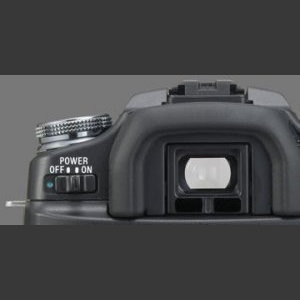 The size of a camera's viewfinder can greatly affect its usability. The larger the viewfinder, the easier it is to judge focus and to see subject detail. The greater a viewfinder's coverage, the easier it is to precisely compose photographs. With modern DSLR cameras, viewfinder size varies more than image quality. So, once image quality is good enough, why not select a camera based on its viewfinder? The more you use your digital SLR, the more you will notice the viewfinder - and its limitations.
The table below shows the specification of each DSLR camera's viewfinder. Coverage is measured as a percentage of the full image captured. Therefore, a viewfinder with a coverage of 100%, shows the entire image to be captured. Magnification is a relative measure which compares the size of what we see through the viewfinder to what we would be seeing without looking through a viewfnder. For cameras with the same crop-factor (focal-length-multiplier), magnification can be used to compare viewfinder size. Magnification is relative because manufacturers all use the field-of-view obtained by a 50mm lens as their basis. Since a 50mm lens gives a different field-of-view depending on the crop-factor, the measured magnification differs too. For reference, the crop factor and resolution of each camera is also shown. The effective size should be used when comparing viewfinders of cameras with different crop factors.
Click on column headings to sort the table.
| Brand / Model | Coverage | Magnification | Crop Factor | Effective Size | |
|---|---|---|---|---|---|
 Medium 100% Coverage Viewfinder: Effective size between 0.5 and 0.6 and 100% coverage. Medium 100% Coverage Viewfinder: Effective size between 0.5 and 0.6 and 100% coverage. | Canon EOS 1D Mark IV | 100% | 0.76 | 1.3 | 0.58 |
 Large 100% Coverage Viewfinder: Effective size over 0.7 and 100% coverage. Large 100% Coverage Viewfinder: Effective size over 0.7 and 100% coverage. | Canon EOS 1D X | 100% | 0.76 | 1 | 0.76 |
| Large 100% Coverage Viewfinder: Effective size over 0.7 and 100% coverage. | Canon EOS 1D X Mark II | 100% | 0.76 | 1 | 0.76 |
| Large 100% Coverage Viewfinder: Effective size over 0.7 and 100% coverage. | Canon EOS 1D X Mark III | 100% | 0.76 | 1 | 0.76 |
| Large 100% Coverage Viewfinder: Effective size over 0.7 and 100% coverage. | Canon EOS 1Ds Mark III | 100% | 0.76 | 1 | 0.76 |
 Small Viewfinder: Effective size below 0.5 with less than 100% coverage. Small Viewfinder: Effective size below 0.5 with less than 100% coverage. | Canon EOS 4000D | 95% | 0.8 | 1.6 | 0.48 |
 Medium Viewfinder: Effective size between 0.5 and 0.6 with less than 100% coverage. Medium Viewfinder: Effective size between 0.5 and 0.6 with less than 100% coverage. | Canon EOS 50D | 95% | 0.95 | 1.6 | 0.56 |
 Large Viewfinder: Effective size between 0.6 and 0.7 with less than 100% coverage. Large Viewfinder: Effective size between 0.6 and 0.7 with less than 100% coverage. | Canon EOS 5D Mark II | 98% | 0.71 | 1 | 0.7 |
| Large 100% Coverage Viewfinder: Effective size over 0.7 and 100% coverage. | Canon EOS 5D Mark III | 100% | 0.71 | 1 | 0.71 |
| Large 100% Coverage Viewfinder: Effective size over 0.7 and 100% coverage. | Canon EOS 5D Mark IV | 100% | 0.71 | 1 | 0.71 |
| Large 100% Coverage Viewfinder: Effective size over 0.7 and 100% coverage. | Canon EOS 5DS | 100% | 0.71 | 1 | 0.71 |
| Large 100% Coverage Viewfinder: Effective size over 0.7 and 100% coverage. | Canon EOS 5DS R | 100% | 0.71 | 1 | 0.71 |
| Medium Viewfinder: Effective size between 0.5 and 0.6 with less than 100% coverage. | Canon EOS 60D | 96% | 0.95 | 1.6 | 0.57 |
| Medium Viewfinder: Effective size between 0.5 and 0.6 with less than 100% coverage. | Canon EOS 60Da | 96% | 0.95 | 1.6 | 0.57 |
| Large Viewfinder: Effective size between 0.6 and 0.7 with less than 100% coverage. | Canon EOS 6D | 97% | 0.71 | 1 | 0.69 |
| Large Viewfinder: Effective size between 0.6 and 0.7 with less than 100% coverage. | Canon EOS 6D Mark II | 98% | 0.71 | 1 | 0.7 |
| Medium Viewfinder: Effective size between 0.5 and 0.6 with less than 100% coverage. | Canon EOS 70D | 98% | 0.95 | 1.6 | 0.58 |
| Small Viewfinder: Effective size below 0.5 with less than 100% coverage. | Canon EOS 77D | 95% | 0.82 | 1.6 | 0.49 |
 Large 100% Coverage Viewfinder: Effective size between 0.6 and 0.7 and 100% coverage. Large 100% Coverage Viewfinder: Effective size between 0.6 and 0.7 and 100% coverage. | Canon EOS 7D | 100% | 1 | 1.6 | 0.63 |
| Large 100% Coverage Viewfinder: Effective size between 0.6 and 0.7 and 100% coverage. | Canon EOS 7D Mark II | 100% | 1 | 1.6 | 0.63 |
| Medium 100% Coverage Viewfinder: Effective size between 0.5 and 0.6 and 100% coverage. | Canon EOS 80D | 100% | 0.95 | 1.6 | 0.59 |
| Medium 100% Coverage Viewfinder: Effective size between 0.5 and 0.6 and 100% coverage. | Canon EOS 90D | 100% | 0.95 | 1.6 | 0.59 |
| Medium Viewfinder: Effective size between 0.5 and 0.6 with less than 100% coverage. | Canon EOS Rebel SL1 | 95% | 0.87 | 1.6 | 0.52 |
| Medium Viewfinder: Effective size between 0.5 and 0.6 with less than 100% coverage. | Canon EOS Rebel SL3 | 95% | 0.87 | 1.6 | 0.52 |
| Medium Viewfinder: Effective size between 0.5 and 0.6 with less than 100% coverage. | Canon EOS Rebel T1i | 95% | 0.87 | 1.6 | 0.52 |
| Medium Viewfinder: Effective size between 0.5 and 0.6 with less than 100% coverage. | Canon EOS Rebel T2i | 95% | 0.87 | 1.6 | 0.52 |
| Small Viewfinder: Effective size below 0.5 with less than 100% coverage. | Canon EOS Rebel T3 | 95% | 0.8 | 1.6 | 0.48 |
| Medium Viewfinder: Effective size between 0.5 and 0.6 with less than 100% coverage. | Canon EOS Rebel T3i | 95% | 0.85 | 1.6 | 0.5 |
| Medium Viewfinder: Effective size between 0.5 and 0.6 with less than 100% coverage. | Canon EOS Rebel T4i | 95% | 0.85 | 1.6 | 0.5 |
| Small Viewfinder: Effective size below 0.5 with less than 100% coverage. | Canon EOS Rebel T5 | 95% | 0.8 | 1.6 | 0.48 |
| Medium Viewfinder: Effective size between 0.5 and 0.6 with less than 100% coverage. | Canon EOS Rebel T5i | 95% | 0.85 | 1.6 | 0.5 |
| Small Viewfinder: Effective size below 0.5 with less than 100% coverage. | Canon EOS Rebel T6 | 95% | 0.8 | 1.6 | 0.48 |
| Small Viewfinder: Effective size below 0.5 with less than 100% coverage. | Canon EOS Rebel T6i | 95% | 0.82 | 1.6 | 0.49 |
| Medium Viewfinder: Effective size between 0.5 and 0.6 with less than 100% coverage. | Canon EOS Rebel T6s | 95% | 0.85 | 1.6 | 0.5 |
| Small Viewfinder: Effective size below 0.5 with less than 100% coverage. | Canon EOS Rebel T7 | 95% | 0.8 | 1.6 | 0.48 |
| Small Viewfinder: Effective size below 0.5 with less than 100% coverage. | Canon EOS Rebel T7i | 95% | 0.82 | 1.6 | 0.49 |
| Small Viewfinder: Effective size below 0.5 with less than 100% coverage. | Canon EOS Rebel XS | 95% | 0.81 | 1.6 | 0.48 |
| Medium Viewfinder: Effective size between 0.5 and 0.6 with less than 100% coverage. | Canon EOS Rebel XSi | 95% | 0.87 | 1.6 | 0.52 |
| Medium Viewfinder: Effective size between 0.5 and 0.6 with less than 100% coverage. | Canon Rebel SL2 | 95% | 0.87 | 1.6 | 0.52 |
| Small Viewfinder: Effective size below 0.5 with less than 100% coverage. | Canon Rebel T8i | 95% | 0.82 | 1.6 | 0.49 |
 Large Viewfinder: Effective size over 0.7 with less than 100% coverage. Large Viewfinder: Effective size over 0.7 with less than 100% coverage. | Leica S Typ 007 | 98% | 0.87 | 0.8 | 1.07 |
| Large Viewfinder: Effective size over 0.7 with less than 100% coverage. | Leica S3 | 98% | 0.87 | 0.8 | 1.07 |
| Large 100% Coverage Viewfinder: Effective size over 0.7 and 100% coverage. | Nikon D3 | 100% | 0.7 | 1 | 0.7 |
| Large 100% Coverage Viewfinder: Effective size between 0.6 and 0.7 and 100% coverage. | Nikon D300 | 100% | 0.95 | 1.5 | 0.63 |
| Medium Viewfinder: Effective size between 0.5 and 0.6 with less than 100% coverage. | Nikon D3000 | 95% | 0.8 | 1.5 | 0.51 |
| Large 100% Coverage Viewfinder: Effective size between 0.6 and 0.7 and 100% coverage. | Nikon D300S | 100% | 0.94 | 1.5 | 0.63 |
| Medium Viewfinder: Effective size between 0.5 and 0.6 with less than 100% coverage. | Nikon D3100 | 95% | 0.8 | 1.5 | 0.51 |
| Small Viewfinder: Effective size below 0.5 with less than 100% coverage. | Nikon D3200 | 95% | 0.78 | 1.5 | 0.49 |
| Medium Viewfinder: Effective size between 0.5 and 0.6 with less than 100% coverage. | Nikon D3300 | 95% | 0.85 | 1.5 | 0.54 |
| Medium Viewfinder: Effective size between 0.5 and 0.6 with less than 100% coverage. | Nikon D3400 | 95% | 0.85 | 1.5 | 0.54 |
| Medium Viewfinder: Effective size between 0.5 and 0.6 with less than 100% coverage. | Nikon D3500 | 95% | 0.85 | 1.5 | 0.54 |
| Large 100% Coverage Viewfinder: Effective size over 0.7 and 100% coverage. | Nikon D3S | 100% | 0.7 | 1 | 0.7 |
| Large 100% Coverage Viewfinder: Effective size over 0.7 and 100% coverage. | Nikon D3X | 100% | 0.7 | 1 | 0.7 |
| Large 100% Coverage Viewfinder: Effective size over 0.7 and 100% coverage. | Nikon D4 | 100% | 0.7 | 1 | 0.7 |
| Large 100% Coverage Viewfinder: Effective size over 0.7 and 100% coverage. | Nikon D4S | 100% | 0.7 | 1 | 0.7 |
| Large 100% Coverage Viewfinder: Effective size over 0.7 and 100% coverage. | Nikon D5 CF | 100% | 0.72 | 1 | 0.72 |
| Large 100% Coverage Viewfinder: Effective size over 0.7 and 100% coverage. | Nikon D5 XQD | 100% | 0.72 | 1 | 0.72 |
| Large 100% Coverage Viewfinder: Effective size between 0.6 and 0.7 and 100% coverage. | Nikon D500 | 100% | 1 | 1.5 | 0.67 |
| Small Viewfinder: Effective size below 0.5 with less than 100% coverage. | Nikon D5000 | 95% | 0.78 | 1.5 | 0.49 |
| Small Viewfinder: Effective size below 0.5 with less than 100% coverage. | Nikon D5100 | 95% | 0.78 | 1.5 | 0.49 |
| Small Viewfinder: Effective size below 0.5 with less than 100% coverage. | Nikon D5200 | 95% | 0.78 | 1.5 | 0.49 |
| Medium Viewfinder: Effective size between 0.5 and 0.6 with less than 100% coverage. | Nikon D5300 | 95% | 0.82 | 1.5 | 0.52 |
| Medium Viewfinder: Effective size between 0.5 and 0.6 with less than 100% coverage. | Nikon D5500 | 95% | 0.82 | 1.5 | 0.52 |
| Medium Viewfinder: Effective size between 0.5 and 0.6 with less than 100% coverage. | Nikon D5600 | 95% | 0.82 | 1.5 | 0.52 |
| Large 100% Coverage Viewfinder: Effective size over 0.7 and 100% coverage. | Nikon D6 | 100% | 0.72 | 1 | 0.72 |
| Medium Viewfinder: Effective size between 0.5 and 0.6 with less than 100% coverage. | Nikon D60 | 95% | 0.8 | 1.5 | 0.51 |
| Large 100% Coverage Viewfinder: Effective size over 0.7 and 100% coverage. | Nikon D600 | 100% | 0.7 | 1 | 0.7 |
| Large 100% Coverage Viewfinder: Effective size over 0.7 and 100% coverage. | Nikon D610 | 100% | 0.7 | 1 | 0.7 |
| Large Viewfinder: Effective size between 0.6 and 0.7 with less than 100% coverage. | Nikon D700 | 95% | 0.72 | 1 | 0.68 |
| Large 100% Coverage Viewfinder: Effective size between 0.6 and 0.7 and 100% coverage. | Nikon D7000 | 100% | 0.95 | 1.5 | 0.63 |
| Large 100% Coverage Viewfinder: Effective size between 0.6 and 0.7 and 100% coverage. | Nikon D7100 | 100% | 0.94 | 1.5 | 0.63 |
| Large 100% Coverage Viewfinder: Effective size between 0.6 and 0.7 and 100% coverage. | Nikon D7200 | 100% | 0.94 | 1.5 | 0.63 |
| Large 100% Coverage Viewfinder: Effective size over 0.7 and 100% coverage. | Nikon D750 | 100% | 0.7 | 1 | 0.7 |
| Large 100% Coverage Viewfinder: Effective size between 0.6 and 0.7 and 100% coverage. | Nikon D7500 | 100% | 0.94 | 1.5 | 0.63 |
| Large 100% Coverage Viewfinder: Effective size over 0.7 and 100% coverage. | Nikon D780 | 100% | 0.7 | 1 | 0.7 |
| Large 100% Coverage Viewfinder: Effective size over 0.7 and 100% coverage. | Nikon D800 | 100% | 0.7 | 1 | 0.7 |
| Large 100% Coverage Viewfinder: Effective size over 0.7 and 100% coverage. | Nikon D800E | 100% | 0.7 | 1 | 0.7 |
| Large 100% Coverage Viewfinder: Effective size over 0.7 and 100% coverage. | Nikon D810 | 100% | 0.7 | 1 | 0.7 |
| Large 100% Coverage Viewfinder: Effective size over 0.7 and 100% coverage. | Nikon D810A | 100% | 0.7 | 1 | 0.7 |
| Large 100% Coverage Viewfinder: Effective size over 0.7 and 100% coverage. | Nikon D850 | 100% | 0.75 | 1 | 0.75 |
| Large Viewfinder: Effective size between 0.6 and 0.7 with less than 100% coverage. | Nikon D90 | 96% | 0.94 | 1.5 | 0.6 |
| Large 100% Coverage Viewfinder: Effective size over 0.7 and 100% coverage. | Nikon Df | 100% | 0.7 | 1 | 0.7 |
| Medium 100% Coverage Viewfinder: Effective size between 0.5 and 0.6 and 100% coverage. | Olympus E-3 | 100% | 1.15 | 2 | 0.58 |
| Medium 100% Coverage Viewfinder: Effective size between 0.5 and 0.6 and 100% coverage. | Olympus E-5 | 100% | 1.15 | 2 | 0.58 |
| Small Viewfinder: Effective size below 0.5 with less than 100% coverage. | Olympus Evolt E-30 | 98% | 1.02 | 2 | 0.5 |
| Small Viewfinder: Effective size below 0.5 with less than 100% coverage. | Olympus Evolt E-420 | 95% | 0.92 | 2 | 0.44 |
| Small Viewfinder: Effective size below 0.5 with less than 100% coverage. | Olympus Evolt E-520 | 95% | 0.92 | 2 | 0.44 |
| Small Viewfinder: Effective size below 0.5 with less than 100% coverage. | Olympus Evolt E-620 | 95% | 0.96 | 2 | 0.46 |
| Large Viewfinder: Effective size over 0.7 with less than 100% coverage. | Pentax 645D | 98% | 0.62 | 0.8 | 0.76 |
| Large Viewfinder: Effective size over 0.7 with less than 100% coverage. | Pentax 645Z | 98% | 0.62 | 0.8 | 0.76 |
| Large 100% Coverage Viewfinder: Effective size over 0.7 and 100% coverage. | Pentax K-1 | 100% | 0.7 | 1 | 0.7 |
| Large 100% Coverage Viewfinder: Effective size over 0.7 and 100% coverage. | Pentax K-1 Mark II | 100% | 0.7 | 1 | 0.7 |
| Large 100% Coverage Viewfinder: Effective size between 0.6 and 0.7 and 100% coverage. | Pentax K-3 | 100% | 0.95 | 1.5 | 0.63 |
| Large 100% Coverage Viewfinder: Effective size between 0.6 and 0.7 and 100% coverage. | Pentax K-3 II | 100% | 0.95 | 1.5 | 0.63 |
| Large 100% Coverage Viewfinder: Effective size over 0.7 and 100% coverage. | Pentax K-3 III | 100% | 1.05 | 1.5 | 0.7 |
| Large 100% Coverage Viewfinder: Effective size between 0.6 and 0.7 and 100% coverage. | Pentax K-30 | 100% | 0.92 | 1.5 | 0.61 |
| Large 100% Coverage Viewfinder: Effective size between 0.6 and 0.7 and 100% coverage. | Pentax K-5 | 100% | 0.92 | 1.5 | 0.61 |
| Large 100% Coverage Viewfinder: Effective size between 0.6 and 0.7 and 100% coverage. | Pentax K-5 II | 100% | 0.92 | 1.5 | 0.61 |
| Large 100% Coverage Viewfinder: Effective size between 0.6 and 0.7 and 100% coverage. | Pentax K-5 IIs | 100% | 0.92 | 1.5 | 0.61 |
| Large 100% Coverage Viewfinder: Effective size between 0.6 and 0.7 and 100% coverage. | Pentax K-50 | 100% | 0.92 | 1.5 | 0.61 |
| Large 100% Coverage Viewfinder: Effective size between 0.6 and 0.7 and 100% coverage. | Pentax K-500 | 100% | 0.92 | 1.5 | 0.61 |
| Large 100% Coverage Viewfinder: Effective size between 0.6 and 0.7 and 100% coverage. | Pentax K-7 | 100% | 0.92 | 1.5 | 0.61 |
| Large 100% Coverage Viewfinder: Effective size between 0.6 and 0.7 and 100% coverage. | Pentax K-70 | 100% | 0.95 | 1.5 | 0.63 |
| Medium Viewfinder: Effective size between 0.5 and 0.6 with less than 100% coverage. | Pentax K-r | 96% | 0.85 | 1.5 | 0.54 |
| Large 100% Coverage Viewfinder: Effective size between 0.6 and 0.7 and 100% coverage. | Pentax K-S1 | 100% | 0.95 | 1.5 | 0.63 |
| Large 100% Coverage Viewfinder: Effective size between 0.6 and 0.7 and 100% coverage. | Pentax K-S2 | 100% | 0.95 | 1.5 | 0.63 |
| Medium Viewfinder: Effective size between 0.5 and 0.6 with less than 100% coverage. | Pentax K-x | 96% | 0.85 | 1.5 | 0.54 |
| Large Viewfinder: Effective size between 0.6 and 0.7 with less than 100% coverage. | Pentax K10D | 95% | 0.95 | 1.5 | 0.6 |
| Large Viewfinder: Effective size between 0.6 and 0.7 with less than 100% coverage. | Pentax K20D | 95% | 0.95 | 1.5 | 0.6 |
| Large 100% Coverage Viewfinder: Effective size between 0.6 and 0.7 and 100% coverage. | Pentax KF | 100% | 0.95 | 1.5 | 0.63 |
| Large 100% Coverage Viewfinder: Effective size between 0.6 and 0.7 and 100% coverage. | Pentax KP | 100% | 0.95 | 1.5 | 0.63 |
| Large Viewfinder: Effective size between 0.6 and 0.7 with less than 100% coverage. | Sigma SD1 Merrill | 98% | 0.95 | 1.5 | 0.62 |
| Medium Viewfinder: Effective size between 0.5 and 0.6 with less than 100% coverage. | Sigma SD15 | 98% | 0.9 | 1.7 | 0.52 |
| Medium Viewfinder: Effective size between 0.5 and 0.6 with less than 100% coverage. | Sony Alpha A100 | 95% | 0.83 | 1.5 | 0.53 |
| Medium Viewfinder: Effective size between 0.5 and 0.6 with less than 100% coverage. | Sony Alpha A200 | 95% | 0.83 | 1.5 | 0.53 |
| Medium Viewfinder: Effective size between 0.5 and 0.6 with less than 100% coverage. | Sony Alpha A290 | 95% | 0.83 | 1.5 | 0.53 |
| Small Viewfinder: Effective size below 0.5 with less than 100% coverage. | Sony Alpha A390 | 95% | 0.74 | 1.5 | 0.47 |
| Medium Viewfinder: Effective size between 0.5 and 0.6 with less than 100% coverage. | Sony Alpha A450 | 95% | 0.8 | 1.5 | 0.51 |
| Medium Viewfinder: Effective size between 0.5 and 0.6 with less than 100% coverage. | Sony Alpha A500 | 95% | 0.8 | 1.5 | 0.51 |
| Medium Viewfinder: Effective size between 0.5 and 0.6 with less than 100% coverage. | Sony Alpha A550 | 95% | 0.8 | 1.5 | 0.51 |
| Medium Viewfinder: Effective size between 0.5 and 0.6 with less than 100% coverage. | Sony Alpha A560 | 95% | 0.8 | 1.5 | 0.51 |
| Medium Viewfinder: Effective size between 0.5 and 0.6 with less than 100% coverage. | Sony Alpha A580 | 95% | 0.8 | 1.5 | 0.51 |
| Medium Viewfinder: Effective size between 0.5 and 0.6 with less than 100% coverage. | Sony Alpha A700 | 95% | 0.9 | 1.5 | 0.57 |
| Large Viewfinder: Effective size over 0.7 with less than 100% coverage. | Sony Alpha A850 | 98% | 0.74 | 1 | 0.73 |
| Large 100% Coverage Viewfinder: Effective size over 0.7 and 100% coverage. | Sony Alpha A900 | 100% | 0.74 | 1 | 0.74 |
 Equipment Articles
Please Support Neocamera
All information on Neocamera is provided free of charge yet running this website is a huge endeavor. Purchases made via affiliate links found throughout the site help keep it running and up-to-date. There is no additional cost to you, so please consider buying via these links to our affilates:




Thank you for your support!


Updates
2025.11.13

Best Gifts for Photographers in 2025 by Budget
The annual Neocamera Photography Gift Guide updated to 2025. Find great gifts for photographers with any price budget.
2025.07.07

Stellar Photo Recovery Review
Review of Stellar Photo Recovery V12. This Windows and MacOS software can recover photos and videos in a huge number of formats from memory cards, USB drives, SSDs and HHDs.
2025.05.14

Huion Kamvas 13 Gen 3 Review
In-Depth review of the Huion Kamvas 13 Gen 3 Pen Display Tablet for photographers and graphic artists.
2025.01.18

Fujifilm GFX 2025 Lens Roundup
Lens Review roundup of Fujifilm GFX Medium-Format lenses. Quality, performance and handling of the GF20-35mm F/4R WR, GF30mm F/3.5 Tilt-Shift and the GF55mm F/1.7.
2024.11.18

Best 2024 Photography Gifts for Every Budget
Great gifts for photographers and photo enthusiasts selected for every budget among the best products of 2024.
2024.08.07

Eye Protection Tips for Professional Photographers
The four main considerations for professional photographers regarding eyewear.
2024.07.14

Fujifilm X100VI Review
Flagship fixed-lens compact digital camera with a 40 MP sensor and Image-Stabilization, a first for the series. Retro design featuring dual control-dials, plus direct ISO, Shutter-Speed and EC dials. Its hybrid viewfinder can switch between EVF and OVF mode.
2024.05.09

Fujifilm GFX100 II Review
Flagship 102 Megapixels Medium-Format Mirrorless Digital Camera with 8-Stop 5-Axis IBIS, 8 FPS Drive, 8K Video and 400 MP Super-Resolution capture in a weatherproof and freezeproof body with dual control-dials and dual memory-card slots.
2024.04.03

Fujifilm X-T5 Review
Newest Fujifilm flagship boasting a 40 MP APS-C sensor, 5-axis IBIS with 7-stop efficiency, 15 FPS continuous drive, 6.2K Video capture, dual control-dials and dual SDXC UHS-II slots in a sturdy weatherproof and freezeproof body.
2023.11.20

Best Digital Cameras of 2023
Find out which are the Best Digital Cameras of 2023. All the new Mirrorless Digital Cameras from entry-level to high-end professional.
2023.07.10

Fujifilm X-H2 Review
40 Megapixels APS-C Hybrid Mirrorless Digital Camera with 7-stop IBIS. Fastest shutter ever and 8K video capture. Large builtin EVF with 0.8X magnification and 5.8 MP, plus an Eye-Start Sensor. Packed with features and large number of controls in a weatherproof and freezeproof body.
2023.05.07

Sony FE 20-70mm F/4G Review
Review of the unique Sony FE 20-70mm F/4G lens. The optical zoom of this lens spans ultra-wide-angle and medium focal-length coverage, making it one of the most versatile Full-Frame lenses on the market.
2025.11.13
2025.07.07
2025.05.14
2025.01.18
2024.11.18
2024.08.07
2024.07.14
2024.05.09
2024.04.03
2023.11.20
2023.07.10
2023.05.07
Camera Bag


Your camera bag is empty. To add a camera or lens click on the star next to its name.
Your camera bag is empty.
Add cameras or lenses by clicking on the star next to their name.
NEWS
2025.12.02

Sony Upgrades Alpha 7 to 5th Generation
Digital Camera ○ Lens
2025.11.29

Venus Optics Releases New Zero-D Tilt-Shift Macro Lens
Lens
2025.11.23
Best Digital Cameras of 2025
Digital Camera
2025.11.14

Photography Gift Guide 2025 Edition
2025.11.06
Canon Announces Third-Generation R6 Mirrorless
Digital Camera ○ Lens
2025.10.23
Fujifilm Launches X-T30 III Plus New Wide Zoom
Digital Camera ○ Lens
2025.10.21
Peak Design Unveils Field Plate and Form Straps
2025.10.16
Nikon Unveils Z-Mount DX Lens Duo
Lens
2025.10.16
Venus Optics Unveils Fast Telephoto Prime Lens
Lens
2025.10.01

Think Tank Photo FocusPoint RollTop Backpacks
Bag
2025.09.30
Sony Produces Super Macro GMaster Lens
Lens
2025.09.17
Venus Optics Created First Telephoto Ultra-Macro Lens
Lens

