



 Camera Basics
 Camera Choosing
 Camera Models
 Camera Buying
 DSLR Buying
 DSLR Buying Guide - Choosing
Sensor Size
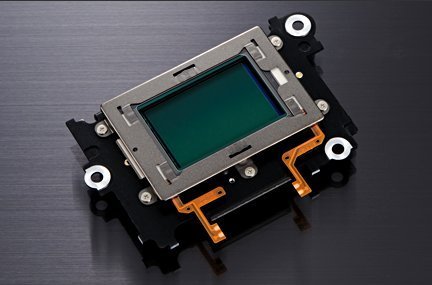
DSLR sensors come in different sizes. These are described by the FLM which indicates the proportion of the sensor in relation to 35mm film. A camera with a sensor the same size as 35mm film is called a Full-Frame camera and therefore has a FLM of 1. Smaller sensors are called Cropped-Sensors. Most common factors using in DSLRs and Mirrorless cameras: 1.5Nikon, Pentax, Sony, some Sigma, Konica-Minolta and Fuji., 1.6Canon only. and 2Olympus and Panasonic..
Top 5 Sensor Size Facts
 Larger sensors gather more light during a given exposure. Physics says that more light gathered equates to less noise and greater dynamic-range. Technology innovations make sensors perform better but a larger sensor will always be superior to a smaller one based on the same technology.
 Larger sensors require larger lenses for more light to reach the sensor. This makes cameras with smaller FLMs more vulnerable to lens defects near the outer edge of a lens. Digital cameras with a larger FLM use the best part of a lens but may stress more its ability to resolve tiny details.
 Larger sensors show less depth of fieldBetter for portraits, worse for landscapes and architecture at a fixed aperture. This increases their ability to isolate a subject from its background, particularly at close focus distances. Conversely, the lens on a camera with a larger sensor has to be stopped down more to get the same depth-of-field. Full-frame DSLRs usually have larger pixels, so they can be stopped down more before hitting their diffraction limit.
 The angle-of-view of a lens is proportional to the sensor size. The effective focal-length of a lens is equal to the actual focal length multiplied by the FLM. On a full-frame DSLR, a lens for a film SLR has the same angle-of-view. On a camera with a 1.5X for example, the angle of view of a 50mm lens is the same as a 75mm lens on the full-frame since 50mm x 1.5 = 75mm.
 Lenses are designed for a minimum FLM. So, a full-frame lens is designed for a FLM of 1 and can be used on smaller sensors too, like those with a FLM of 1.5. The converse is not true. Some full-frame cameras allow the use of lenses for cropped-sensors by automatically cropping the image.
The FLM, also called Crop-Factor as mentioned in the previous page of this DSLR Buying Guide, is sometimes given names instead of numbers. A crop-factor of 2X is called Four-Thirds based on the name of the standard which introduced DSLRs with a 2X FLM and aspect ratio of 4:3. A crop-factor of 1.5X is called APS-C which is a historical name for film with that size. APS-C is also used to describe a crop-factor of 1.6X when talking about Canon DSLRs. APS-H is the name for a FLM of 1.3X and Full-Frame is the name for a FLM of 1.
Anti-Shake and Stabilization
Two approaches exist for reducing the effects of camera shake by involuntary movements of the photographer. One builds an image-stabilization mechanism inside the camera body. This was pioneered by Konica-Minolta and works by moving the sensor to compensate for camera movements. This was originally called Anti-Shake which Sony renamed to Super Steady Shot, when the acquired the technology.
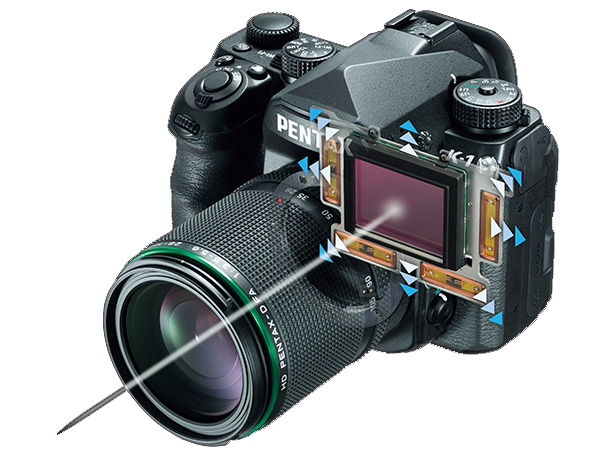
Pentax developed similar technology called Shake-Reduction. Since Sony no longer makes DSLRs, Pentax is currently the only manufacturer with built-in image stabilization in a DSLR. They use their mechanism to provide unique features: Anti Alias Filter Simulation, Astro-Tracer and Super-Resolution Capture. Only the latter is available on mirrorless cameras. Olympus took the same IBIS approach but is no longer in business, having sold their camera division to JIP in January 2021.
The way all other manufacturers take is to embed stabilization in select lensesMostly in lenses with a long focal-length. by moving an internal lens element. Each manufacturer has a name for it:
- Canon - IS
- Nikon - VR
- Panasonic - Mega OIS
- Sigma - Optical Stabilization
- Sony - OSS
The first couple of generations of sensor-shift mechanisms provided the same level of efficiency as optical stabilization. Both types of systems improved but optically there are only two possible axis of correction. Pentax added a third axis to compensate for rotational movement which is impossible to correct optically and then Olympus raised the bar to 5-axis, adding two tilt angles. Eventually, most mirrorless cameras adopted a 5-axis mechanism but only Pentax DSLRs have this advantage. Additionally:
- Body-based stabilization applies to all lenses and its cost is incurred once per camera. This is excellent for legacy lenses and for those without stabilized counter-parts such as bright prime lenses and fisheye ones.
- Optical stabilization is only available on select lenses and its cost is incurred once per lens.
- The effect of optical stabilization can be seen through the viewfinder. This possibly makes it easier to frame hand-held with very long telephoto lenses.


Lens Mounts
A lens mount is the physical connection between a DSLR and lenses. The specific mount used by a DSLR is decided by the brand of camera. Choosing a particular camera brand gives access to the lens line-up of that manufacturer and is in fact one of the most important considerations when buying a DSLR. This is detailed in Choosing a DSLR brand which is the next page of this guide.
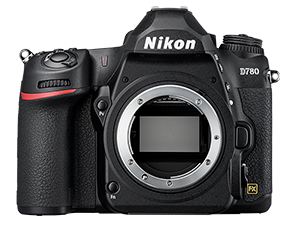
A lens mount has 2 purposes. It connects and enables communication between a camera body and its lens. Since physical connections have seldom changed, most lenses can be physically connected to a body with the right type of mountEach manufacturer has its lens mount, except for Fuji DSLR which uses a Nikon lens mount.. As lenses were modernized, new features were added to newer lenses and mounts. The consequence of this is that most older lenses can mount on cameras from their manufacturer but not all such lenses fully function on DSLR cameras.
Certain third-parties make lenses for multiple mounts which generally differ specification wise and quality wise from camera manufacturers' line-ups. When purchasing a third-party lens, it is critical to choose the one with the correct mount depending on your camera.
Lens Types
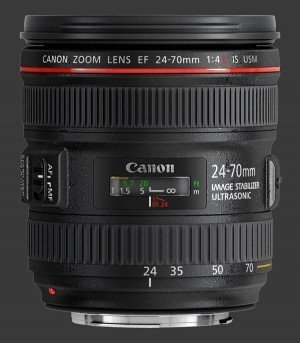 There are two major types of lenses: zoom and prime. A zoom lens is one which can change its focal-length, causing it to vary the angle-of-view it covers. A prime lens has a single focal-length and does not zoom. It approximatelyThere is often a small variation as the lens focuses. shows a fixed angle-of-view on a given camera at all times.
Zoom lenses are very versatile and perfectly precise when it comes to framing. For this reason, they are the most commonly sold and uses lenses.
Prime lenses are generally advantageous in terms of weight and size. Their simpler design, compared to zoom lenses, lets them have a wider maximum aperture which lets more light inThis is mostly important for low-light and indoor shots and produces images with more shallow depth-of-field. They have a reputation for higher image quality which is being disputed.
When a zoom lens is labeled with two maximum apertures, one is the maximum aperture at the shortest focal length and the other is the maximum aperture at the longest focal length. When a lens is labeled with one maximum aperture value, the maximum aperture is the same across all focal lengths. Almost all modern lenses are auto-focus lensesThey can also be focused manually., as opposed to manual-focus ones that must be focused manually. A lens which can focus closer than a typical one is labeled as a macro-lens.
Like cameras, lenses come in different qualities that cannot be guessed from specifications alone. Also, each manufacturer has designations for lenses of various qualities. Lens quality determines its potential sharpness, resolution, contrast and aberrations. Lens quality strongly influences autofocus-speed when it includes a focus-motor. Canon lenses with a quick and quiet focusing system are labeled USM, Pentax labels those SDM, Nikon calls those as AF-S and Sony calls them SSM.
TIP Read the Lens Buying Guide for more information about understanding and choosing lenses.
Focal-Length
Lenses are primarily chosen by their angle-of-view on a particular camera. Instead of directly specifying the viewing-angle, the 35mm equivalent focal-length is commonly used instead. For a Full-Frame DSLR, it is the same as the actual focal-length. For an APS-C camera, one must account for a 1.5X or 1.6X, for Canon, focal-length multiplier (FLM), also known as Crop-Factor.
In 35mm-equivalent terms:
- 50mm is considered normal since it shows a similar perspective to the perception of a single human eye.
- 35 to 70mm lenses are considered standard. They are used for general purpose photography and snapshots.
- Lenses longer than 70mm are considered telephotoTypical for close-ups.
- Lenses longer than 250mm are considered ultra-telephotoTypical for wildlife.
- Lenses shorter than 35mm are considered wide-angleTypical for indoor shots and architecture.
- Lenses shorter than 24mm are considered ultra-wide angle and show pronounced perspective distortion. Much shorter lenses are mostly fisheye lensesLenses which do not preserve straight lines unless they pass through the center of the frame..
- Portraits are often taken around 105mm, since it produces a pleasing perspective.
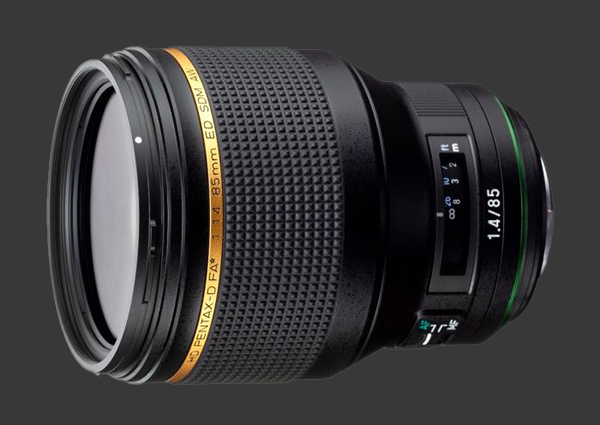
To figure out which lens to look for:
- Select a range of useful focal-lengths and divide by the camera's focal-length-multiplierFor example, the 35mm equivalent 36-120mm range on a camera with a FLM of 1.5 is 24-80mm.
- Divide the maximum by the minimum focal-length to determine the optical zoomIf the range is 35-105mm, then the optical zoom is 105 / 35 = 3X.
- If the optical zoom is higher than 15X, then more than one lens will be required.
- If the optical zoom is higher than 6X, it may be possible to get a single lens but such a lens typically compromises on image quality.
- A single zoom or several prime lens can be chosen when a short range is required.
- Select one or more lenses to closely match the desired range. Additional requirements such as maximum aperture and minimum focus distance can be considered here to make a final decision.
 Back to DSLR Basics
Please Support Neocamera
All information on Neocamera is provided free of charge yet running this website is a huge endeavor. Purchases made via affiliate links found throughout the site help keep it running and up-to-date. There is no additional cost to you, so please consider buying via these links to our affilates:




Thank you for your support!


Camera Bag


Your camera bag is empty. To add a camera or lens click on the star next to its name.
Your camera bag is empty.
Add cameras or lenses by clicking on the star next to their name.
New Cameras & Lenses

Sony FE 28-70mm F/3.5-5.6 OSS II
Stabilization & Weatherproof
Sony E Mount Zoom
2025-12-02
Sony Alpha A7 V
33 Megapixels Mirrorless
Sony E Lens Mount
Built-in Stabilization
Weatherproof
2025-12-02
Venus Optics Laowa 35mm F/2.8 Zero-D Tilt-Shift 0.5X Macro
Leica L Mount Prime Lens
2025-11-29Venus Optics Laowa 35mm F/2.8 Zero-D Tilt-Shift 0.5X Macro
Hasselblad XCD Mount Prime Lens
2025-11-29Venus Optics Laowa 35mm F/2.8 Zero-D Tilt-Shift 0.5X Macro
Fujifilm G Mount Prime Lens
2025-11-29Venus Optics Laowa 35mm F/2.8 Zero-D Tilt-Shift 0.5X Macro
Sony E Mount Prime Lens
2025-11-29
Updates
2025.11.13

Best Gifts for Photographers in 2025 by Budget
The annual Neocamera Photography Gift Guide updated to 2025. Find great gifts for photographers with any price budget.
2025.07.07

Stellar Photo Recovery Review
Review of Stellar Photo Recovery V12. This Windows and MacOS software can recover photos and videos in a huge number of formats from memory cards, USB drives, SSDs and HHDs.
2025.05.14

Huion Kamvas 13 Gen 3 Review
In-Depth review of the Huion Kamvas 13 Gen 3 Pen Display Tablet for photographers and graphic artists.
2025.01.18

Fujifilm GFX 2025 Lens Roundup
Lens Review roundup of Fujifilm GFX Medium-Format lenses. Quality, performance and handling of the GF20-35mm F/4R WR, GF30mm F/3.5 Tilt-Shift and the GF55mm F/1.7.
2024.11.18

Best 2024 Photography Gifts for Every Budget
Great gifts for photographers and photo enthusiasts selected for every budget among the best products of 2024.
2024.08.07

Eye Protection Tips for Professional Photographers
The four main considerations for professional photographers regarding eyewear.
2024.07.14

Fujifilm X100VI Review
Flagship fixed-lens compact digital camera with a 40 MP sensor and Image-Stabilization, a first for the series. Retro design featuring dual control-dials, plus direct ISO, Shutter-Speed and EC dials. Its hybrid viewfinder can switch between EVF and OVF mode.
2024.05.09

Fujifilm GFX100 II Review
Flagship 102 Megapixels Medium-Format Mirrorless Digital Camera with 8-Stop 5-Axis IBIS, 8 FPS Drive, 8K Video and 400 MP Super-Resolution capture in a weatherproof and freezeproof body with dual control-dials and dual memory-card slots.
2024.04.03

Fujifilm X-T5 Review
Newest Fujifilm flagship boasting a 40 MP APS-C sensor, 5-axis IBIS with 7-stop efficiency, 15 FPS continuous drive, 6.2K Video capture, dual control-dials and dual SDXC UHS-II slots in a sturdy weatherproof and freezeproof body.
2023.11.20

Best Digital Cameras of 2023
Find out which are the Best Digital Cameras of 2023. All the new Mirrorless Digital Cameras from entry-level to high-end professional.
2023.07.10

Fujifilm X-H2 Review
40 Megapixels APS-C Hybrid Mirrorless Digital Camera with 7-stop IBIS. Fastest shutter ever and 8K video capture. Large builtin EVF with 0.8X magnification and 5.8 MP, plus an Eye-Start Sensor. Packed with features and large number of controls in a weatherproof and freezeproof body.
2023.05.07

Sony FE 20-70mm F/4G Review
Review of the unique Sony FE 20-70mm F/4G lens. The optical zoom of this lens spans ultra-wide-angle and medium focal-length coverage, making it one of the most versatile Full-Frame lenses on the market.
2025.11.13
2025.07.07
2025.05.14
2025.01.18
2024.11.18
2024.08.07
2024.07.14
2024.05.09
2024.04.03
2023.11.20
2023.07.10
2023.05.07
NEWS
2025.12.02

Sony Upgrades Alpha 7 to 5th Generation
Digital Camera ○ Lens
2025.11.29

Venus Optics Releases New Zero-D Tilt-Shift Macro Lens
Lens
2025.11.23
Best Digital Cameras of 2025
Digital Camera
2025.11.14

Photography Gift Guide 2025 Edition
2025.11.06
Canon Announces Third-Generation R6 Mirrorless
Digital Camera ○ Lens
2025.10.23
Fujifilm Launches X-T30 III Plus New Wide Zoom
Digital Camera ○ Lens
2025.10.21
Peak Design Unveils Field Plate and Form Straps
2025.10.16
Nikon Unveils Z-Mount DX Lens Duo
Lens
2025.10.16
Venus Optics Unveils Fast Telephoto Prime Lens
Lens
2025.10.01

Think Tank Photo FocusPoint RollTop Backpacks
Bag
2025.09.30
Sony Produces Super Macro GMaster Lens
Lens
2025.09.17
Venus Optics Created First Telephoto Ultra-Macro Lens
Lens

