



 Camera Basics
 Camera Choosing
 Camera Models
 Camera Buying
 DSLR Buying
 DSLR Buying Guide - Basics
Introduction
A Digital SLR or DSLR is a digital camera with a single interchangeable lensThis is currently the case but has not always been so. that is used for both recording and framing an image. It does so thanks to a mirror that reflects light to an optical viewfinder and moves out of the way to capture images. DSLR therefore stands for Digital Single Lens Reflex.
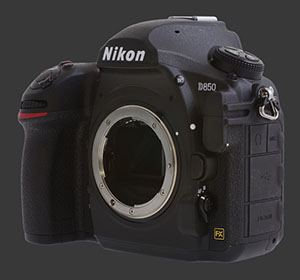
DSLR cameras are built differently than fixed-lens digital camerasOften incorrectly called Point&Shoot digital cameras, of which only some are.. Given that SLRs must be a certain size to accommodate a moving mirror and optical viewfinder, they always use large imaging sensors. This makes them advantageous in terms of image quality, particularly in low-light when high-sensitivities exasperate image-noise. Their size also makes it easier to include powerful components and high-end features.
A DSLR also differs from Mirrorless CamerasPreviously known as SLD or Single Lens Digital. which were invented to bridge the gap between compact cameras and DSLRs. Some Mirrorless cameras have sensors of the same size as DSLRs and are therefore capable of the same image quality. Since they do not use a reflex mirror, mirrorless cameras can be made smaller but they cannot provide an optical viewfinder to frame with.
Today's digital SLR cameras all have interchangeable lenses. While this provides great flexibility, choosing the right lens or set of lenses can be more difficult than choosing the right DSLR.
The third page of this DSLR Buying Guide shows all current DSLRs. For the list both current and discontinued models, go to the DSLR listing page.
Top 10 DSLR Facts
These are the 10 most important things to know about Digital SLR cameras. There are critical difference between DSLRs and other types of digital cameras, so be sure to understand these before comparing and shopping for a DSLR, particularly if it will be your first.
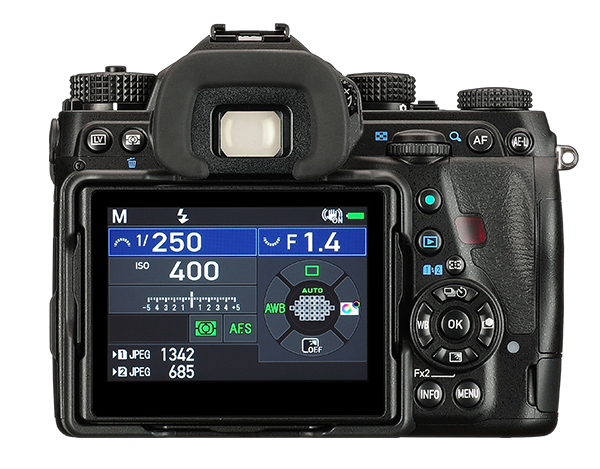
 Digital SLR cameras are most efficient when using their OVF. Even though modern DSLRs feature Live-View which enables the rear LCD to show an approximation of the scene, autofocus slows down considerably on most models with a noticeable shutter-lag, plus the preview is rarely WYSIWYG.
 DSLR viewfinders see through the lens. This makes it easy to judge focus - but neither exposure nor white-balance - through it. One cannot see if a picture will be over-exposed or under-exposed or have a color-cast before taking it.
 Optical Zoom depends on the lens attached to the camera. It makes no sense to specify optical zoom when describing a digital SLR camera. Some lenses do not zoom and are called prime lenses.
 The angle-of-view of a lens depends on the Crop-Factor or FLM of the camera it is mounted on. The Crop-Factor of a DSLR is determined by the size of its imaging sensor. Both Crop-Factor and Focal-Length-Multiplier mean exactly the same thing and are measured in relation to 35mm film.
 The connector between an SLR camera and a lens is called a mount. Only SLR cameras and lenses with the same mount can be attached together. Even if a lens attaches, it may not fully work. Lenses lose autofocus sometimes. A lens designed for a too small sensor will clip large parts of the image.
 SLR lenses are almost always zoomed and manually focused by hand. This is infinitely precise, considerably faster and much more responsive than the power-zoom and electronic focus used on nearly all fixed-lens cameras.
 DSLR cameras are powerful photographic tools. All currently feature full manual-controls, manual-focus, custom white-balance, choice of metering patterns, continuous drive, high-ISO sensitivities, a hot-shoe for an external flash and support RAW capture. Most current models also have automatic dust-reduction, white-balance fine-tuning, and a fully automatic mode as well.
 Available apertures are determined by the attached lens. A lens prominently specifies its maximum aperture at both ends of the zoom, if applicable. Available shutter-speeds and ISO sensitivities are determined by the camera and are usable at any aperture on all lenses. All shutter-speeds are not compatible with electronic flash though, including the built-in one, when applicable.
 Nearly all DSLRs from 2010 onward can record video. DSLR video quality is very good with a shallow cinematic depth-of-field. Autofocus while filming is usually supported but the contrast-detect AF-system used by most DSLRs is problematic and depth-of-field exaggerates the problem.
 Battery life on a DSLR is significantly longer than most fixed-lens digital cameras unless Live-View or video-capture is used. That happens because the LCD consumes a lot of power and the imaging sensor needs to be constantly active.
Advantages
DSLR cameras are considered the benchmark for image quality. The large sensors used in these cameras delivers low image-noise, high retention of detail and a wide dynamic-range. The advantages of such sensors is even more significant at high ISO sensitivities commonly used for low-light hand-help photography. The ultimate image quality though, is strongly influenced by the lens used.
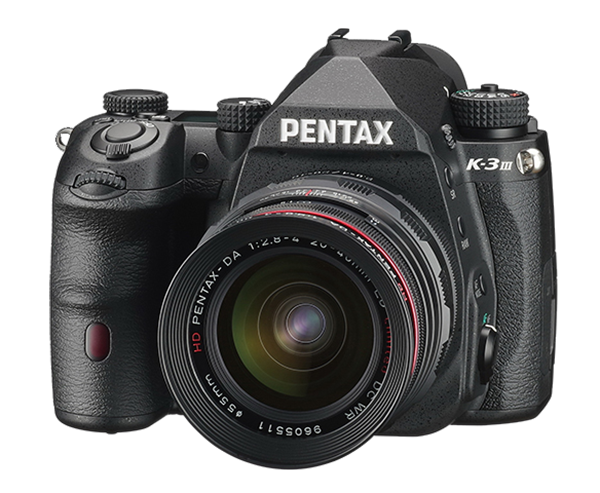
The vast majority of fixed-lens cameras use significantly smaller sensors. A few exceptions produce similar image quality as DSLRs and those are excellent choices to obtain high image-quality without the bulk or complexity of a DSLR. Search all fixed-lens cameras with comparable sensor-size to a DSLR.
Mirrorless cameras which often use the same sensor-size produce images of similar quality. They save bulk but not complexity. These cameras still feature interchangeable lenses and photographic controls, although lower end models make them considerably less accessible.


DSLR cameras outperform most cameras when it comes to speed. The difference is huge compated to fixed-lens cameras since DSLRs are capable of focusing and shooting faster for much longer. Most other timings are noticeably faster too, including the shot-to-shot delay and startup time. Modern high-end mirrorless cameras have substantially narrowed the performance gap and even exceeded certain aspects, such as continuous drive speed and viewfinder blackout.
The most significant performance advantage of a DSLR is in terms of speed. Compared to fixed-lens cameras, a DSLR focuses faster and shoots faster for longer. . Compared to the latest mirrorless cameras, DSLRs are still ahead overall but the gap is closing. Autofocus speeds on some models matches entry-level to mid-range DSLRs when light levels are not too low.
Focusing speed is important when capturing a moving subject. The faster a camera can focus, the faster it will take a picture. Shot-to-shot times and burst speed are generally faster at maximum resolution on a DSLR. Burst-mode is mostly used in action and fashion photography where capturing a precise moment is paramount. Not only do DSLRs shoot faster, they also take more shots in a single burst at constant speed. This increases the chances of capturing a decisive moment.
Interchangeable lenses are no longer unique to DSLRs but they remain one of their greatest strengths. They bring versatility for framing and isolating subjects thanks to the shallow depth-of-field provided by bright lenses in combination with large sensors. SLR lenses have existed far longer than mirrorless ones and the choice of native lensesPentax K and Sony SLT exceptionally use the same lenses as DSLRs. Others have their own lens-mounts but can use DSLR lenses with some restrictions using adapters. is immensely greater for the former.
Disadvantages
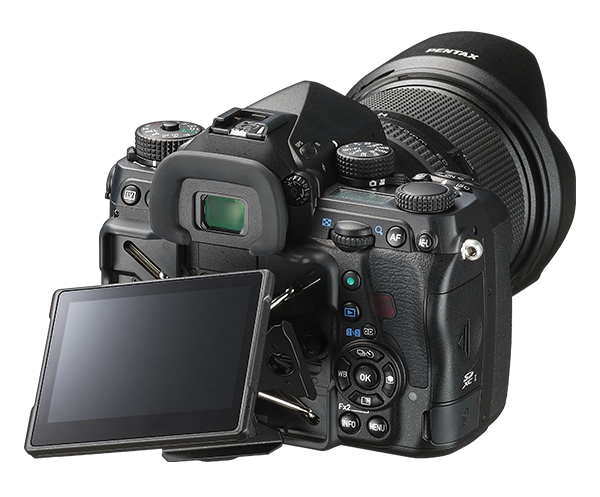
DSLR cameras, like everything else, have issues proper to them. The two main issues are price and sensor dust. Even the cheapest DSLR is priced above nearly all fixed-lens digital cameras when one or more lens is included. Mirrorless cameras on average are priced below DSLRs but there are plenty of entry-level DSLRs which cost less than a good number of mirrorless cameras.
To get the best image quality out of a DSLR, one needs to buy good quality lenses. Often such lenses cost at least the same price as the camera. Quality lenses either do not zoom or do so within a short range, so it can take quite a few lenses to cover your needs and this multiples costs.
Sensor dust is simply dust that enters into a digital SLR while the lens is being changedThis cannot really happen with a fixed-lens camera.. One way to minimize it is to buy a single versatile lens and leave it permanently on. Most recent DSLRs also incorporate a mechanism designed to shake-off sensor dust. This reduces the problem without eliminating it completely.
By far the greatest complaint about DSLR cameras is bulk. Even the smallest DSLR is big. Attach a lens and it gets bigger. Take more lenses with you and things get bigger and heavier and telephoto lenses are particularly long. All together this means that using a DSLR requires a commitment to carry that much bulk around. After all, if it is inconvenient to carry, it often stays home and takes fewer pictures. Bulk is even more important a factor for travel photography.
The size of DSLRs contributes to its effect on people in both positive and negative ways. On the positive side, it gives the impression of professionalism. This same aspect also has negative side-effects: It attracts a lot more attention and makes people more self-aware, reducing opportunities for candid photography. In some areas, it easily attracts the attention of the wrong type of people.
Minor issues of DSLR cameras include the limited live-view functionality and shutter-sound. One cannot always preview how a picture will be exposed. Instead, metering and experience must be relied upon. DSLR cameras have a much louder shutter soundDue to the moving mirror and larger focal-plane shutter. than fixed-lens digital cameras. This can be disruptive in quiet environments or when discretion is required. Mirrorless cameras are quieter than DSLR and those with an electronic-shutter even more so.

Please Support Neocamera
All information on Neocamera is provided free of charge yet running this website is a huge endeavor. Purchases made via affiliate links found throughout the site help keep it running and up-to-date. There is no additional cost to you, so please consider buying via these links to our affilates:




Thank you for your support!


Camera Bag


Your camera bag is empty. To add a camera or lens click on the star next to its name.
Your camera bag is empty.
Add cameras or lenses by clicking on the star next to their name.
SLT - Almost DSLR and Mirrorless
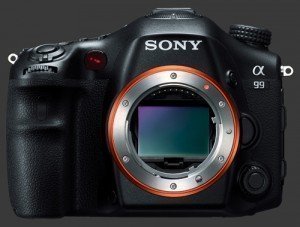
Sony makes cameras the size and shape of DSLRs which use the same sensors and lenses. They call these SLT cameras for Single Lens Translucent. They use a semi-transparent mirror to reflect around 30% of light to focus and metering sensors. Contrarily to an SLR, an SLT has an EVF. This viewfinder can preview exposure, color, white-balance and focus, up to its maximum precision.
Facts 1 & 2 above do not apply to Sony SLT cameras and neither does fact 10. Facts 3 to 8 remain applicable though. As for fact 9, Sony SLT cameras are unique in that they can match the video quality of DSLRs and use Phase-Detect autofocus completely. Newer DSLRs are appearing with hybrid systems, so improvements may come soon.
The best way to understand an SLT camera is to see it as an over-sized mirrorless with fast autofocus. Search for current Sony SLT cameras here. These are compatible with Alpha lenses from Sony and Konica-Minolta.

New Cameras & Lenses

Sony FE 28-70mm F/3.5-5.6 OSS II
Stabilization & Weatherproof
Sony E Mount Zoom
2025-12-02
Sony Alpha A7 V
33 Megapixels Mirrorless
Sony E Lens Mount
Built-in Stabilization
Weatherproof
2025-12-02
Venus Optics Laowa 35mm F/2.8 Zero-D Tilt-Shift 0.5X Macro
Leica L Mount Prime Lens
2025-11-29Venus Optics Laowa 35mm F/2.8 Zero-D Tilt-Shift 0.5X Macro
Hasselblad XCD Mount Prime Lens
2025-11-29Venus Optics Laowa 35mm F/2.8 Zero-D Tilt-Shift 0.5X Macro
Fujifilm G Mount Prime Lens
2025-11-29Venus Optics Laowa 35mm F/2.8 Zero-D Tilt-Shift 0.5X Macro
Sony E Mount Prime Lens
2025-11-29
Updates
2025.11.13

Best Gifts for Photographers in 2025 by Budget
The annual Neocamera Photography Gift Guide updated to 2025. Find great gifts for photographers with any price budget.
2025.07.07

Stellar Photo Recovery Review
Review of Stellar Photo Recovery V12. This Windows and MacOS software can recover photos and videos in a huge number of formats from memory cards, USB drives, SSDs and HHDs.
2025.05.14

Huion Kamvas 13 Gen 3 Review
In-Depth review of the Huion Kamvas 13 Gen 3 Pen Display Tablet for photographers and graphic artists.
2025.01.18

Fujifilm GFX 2025 Lens Roundup
Lens Review roundup of Fujifilm GFX Medium-Format lenses. Quality, performance and handling of the GF20-35mm F/4R WR, GF30mm F/3.5 Tilt-Shift and the GF55mm F/1.7.
2024.11.18

Best 2024 Photography Gifts for Every Budget
Great gifts for photographers and photo enthusiasts selected for every budget among the best products of 2024.
2024.08.07

Eye Protection Tips for Professional Photographers
The four main considerations for professional photographers regarding eyewear.
2024.07.14

Fujifilm X100VI Review
Flagship fixed-lens compact digital camera with a 40 MP sensor and Image-Stabilization, a first for the series. Retro design featuring dual control-dials, plus direct ISO, Shutter-Speed and EC dials. Its hybrid viewfinder can switch between EVF and OVF mode.
2024.05.09

Fujifilm GFX100 II Review
Flagship 102 Megapixels Medium-Format Mirrorless Digital Camera with 8-Stop 5-Axis IBIS, 8 FPS Drive, 8K Video and 400 MP Super-Resolution capture in a weatherproof and freezeproof body with dual control-dials and dual memory-card slots.
2024.04.03

Fujifilm X-T5 Review
Newest Fujifilm flagship boasting a 40 MP APS-C sensor, 5-axis IBIS with 7-stop efficiency, 15 FPS continuous drive, 6.2K Video capture, dual control-dials and dual SDXC UHS-II slots in a sturdy weatherproof and freezeproof body.
2023.11.20

Best Digital Cameras of 2023
Find out which are the Best Digital Cameras of 2023. All the new Mirrorless Digital Cameras from entry-level to high-end professional.
2023.07.10

Fujifilm X-H2 Review
40 Megapixels APS-C Hybrid Mirrorless Digital Camera with 7-stop IBIS. Fastest shutter ever and 8K video capture. Large builtin EVF with 0.8X magnification and 5.8 MP, plus an Eye-Start Sensor. Packed with features and large number of controls in a weatherproof and freezeproof body.
2023.05.07

Sony FE 20-70mm F/4G Review
Review of the unique Sony FE 20-70mm F/4G lens. The optical zoom of this lens spans ultra-wide-angle and medium focal-length coverage, making it one of the most versatile Full-Frame lenses on the market.

