



 Camera Basics
 Camera Choosing
 Camera Models
 Camera Buying
 DSLR Buying
Demystifying Digital Camera Types - 2012 Edition
Introduction
While there are many different types of digital cameras, there are even more terms used to describe them! Not only that, but some terms are used differently by different people which propagates confusion. This short article covers most common terminology and how it is used.
2012 has been a great year for digital cameras. There were already plenty of innovations and unique cameras launched, including models which blur the boundaries between traditional digital camera types. The popularity of mirrorless interchangeable lens cameras is growing quickly and new models are taking on features which were once only seen on digital SLRs.
Point & Shoot Digital Cameras
A point-and-shoot is a camera which usually takes an adequately exposed and focused picture by pointing the camera at the subject and shooting the picture by pressing the shutter button. Hence, the term point-and-shoot.
Technically, nearly all modern digital cameras fit that description. Even high-end digital cameras have an Auto mode that works the same way. So most people use this term to mean strictly point-and-shoot: a camera on which you cannot directly set the primary photographic controls of aperture and shutter-speed. Note that most such modern cameras offer some controls, such as ISO speed, flash mode, drive mode and white-balance.
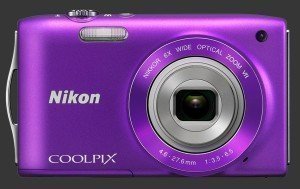
Some people incorrectly use the term to mean a camera with a fixed lens, meaning a digital camera which does not support interchangeable lenses. This includes many models with full manual controls! The correct term is a fixed-lens camera. In other words, one whose lens is fixed and cannot be removed.
The vast majority of point-and-shoot cameras are small and fit within the ultra-compact or compact category and are at most 2" thick. Recent technological improvements make larger ones increasingly rare.
A compact or ultra-compact with a more powerful optical zoom is called a travel-zoom. These can be point-and-shoot mode but not all are.
Prosumer Digital Cameras
The terms prosumer-camera and bridge-camera are interchangeably refer to an advanced digital cameras with full manual controls and a fixed lens. The word prosumer is a contraction of professional and consumer, signifying someone in between. The word bridge evokes the same idea as something in between.
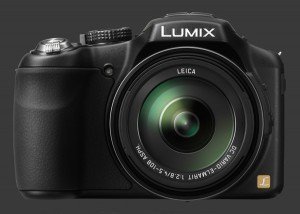
Such digital cameras are occasionally called all-in-one. This refers to the lens being fixed. Batteries and memory are always removable on such cameras, although there exists point-and-shoot models with a built-in battery and memory.
Prosumer cameras often have both a rear LCD and a viewfinder. Optical tunnel viewfinders are increasingly rare among these cameras as they make it impossible to accommodate ultra-wide or long lenses. A built-in EVF is more typical and provides considerably more accurate framing which is important for advanced users.
An ultra-zoom is a camera with a large optical zoom. This is at least 10X but most recent models manage at least 20X and up to 125X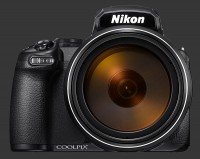
Nikon Coolpix P1000 now. Modern ultra-zooms not only reach well into the super-telephoto range but many also start ultra-wide around too. The smaller ones have more modest zooms yet still feature manual-controls. A select few models support external flash via a standard hot-shoe.
Digital SLR (DSLR) Cameras
SLR stands for Single Lens Reflex, a camera which has a single lens where incoming light is reflected into the viewfinder using a mirror. A digital SLR is called a DSLR.
This makes it distinct from a camera with an electronic viewfinder (EVF) which gets its preview from the imaging sensor. This also contrasts with a twin-lens camera where the second lens is used exclusively for a viewfinder. While the former is another type of digital camera described below, the latter only exists in film cameras.
The terms SLR and DSLR are probably the most standard terminology because of their obvious definition. By their reflex nature, all SLR cameras have an optical viewfinder (OVF). The view from the OVF is formed by the camera lens and therefore previous focus and framing, except for slight cropping on entry-level models. One which shows exact framing is said to have a 100% coverage viewfinder.
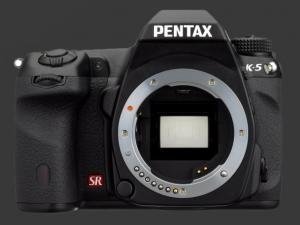
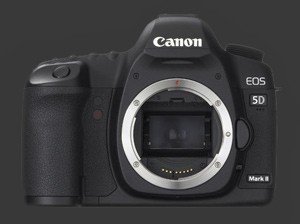
A full-frame DSLR is a camera whose sensor is the same size as 35mm film. These cameras can use lenses made for 35mm film cameras and the result will be an identical field-of-view. The converse is a cropped-sensor camera which has a smaller sensor. Most can still use lenses for 35mm film cameras but the result is a more narrow field-of-view, hence the term cropped-sensor.
DSLRs are known to produce images of the highest quality, particularly in low-light where larger sensors have an advantage simply based on the laws of physics. Generations tend to leap-frog each other, so current DSLRs with cropped-sensor can beat previous generation full-frame ones. Large sensors require correspondingly large lenses which makes DSLRs larger than most other types of digital cameras. Their large size also lets them incorporate more features and more sophisticated components which is why this type of camera is the most feature-rich.
Note that some stores confuse consumers by listing prosumer cameras in the SLR category because of their physical resemblance! However, most people are right to disagree because a camera with an EVF cannot be an SLR camera since light is not reflected to the viewfinder. This is further complicated by the advent of SLDs and particularly Sony's SLT cameras which use a semi-transparent mirror to feed the autofocus and metering systems, not the viewfinder. Those still use an EVF.
Even though the term SLR does not imply anything else, current DSLR cameras have interchangeable lenses and full-manual controls. This was not always the case, as there was a fixed-lens SLR camera from HP which exited the camera business years ago. Since reflex optics take space, DSLR cameras are among the largest digital cameras.
Mirrorless (SLD & SLT) Cameras
Any camera which supports different lenses is called an Interchangeable Lens Camera (ILC). This includes all current DSLR cameras as well as cameras without a reflex mirror. Those are commonly called mirrorless, due to their lack of mirror, obviously.
Previously, the term Single Lens Digital (SLD) was coined by Olympus to name these new cameras, but so far the name mirrorless stuck. The name logic was to replace the R of DSLR which no longer applied with a D to represent a digital display. This is arguably a better name as it defines what it has rather than what it does not.

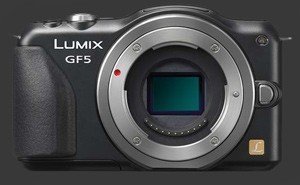
Mirrorless cameras were introduced to bridge the image quality gap between compact cameras and DSLRs in a comparatively small form-factor. Not needing a reflex mirror, these cameras are made much slimmer despite using the same sensors as many entry-level DSLRs. While introducing their mirrorless cameras, most camera manufacturers also launched moderately more compact lenses to match.
The majority of mirrorless cameras use sensors with a 2X or 1.5X crop-factor. The difference in camera size is minimal but smaller crop-factors use smaller lenses which translates into an even greater size-advantage. As sensors are similar, mirrorless cameras care closing the gap with cropped-sensor DSLRs.
There are two notable exceptions at opposite ends of the spectrum:
- The Pentax Q system of mirrorless cameras uses the same sensor-size as most compact cameras and is comparatively minuscule but cannot compete in terms of image quality.
- The Sony Alpha SLT system which replaces their DSLR lineup being phased out. These cameras are full-size and use a semi-transparent mirror to send light to dedicated autofocus and metering sensors which can keep working while the camera is shooting stills or video. These cameras share sensors and the lens mount of other DSLRs. They are both cropped-sensor and full-frame models.
Autofocus speed started as the major drawback of mirrorless cameras. Here to the gap is closing with some manufacturers incorporating phase-detect autofocus and other simply improving contrast-detection autofocus. While the accuracy of contrast-detect autofocus is superior to that of phase-detect, the latest phase-detection systems are more sensitive and still faster.
Premium (Large-Sensor) Digital Cameras
Premium are fixed lens cameras with efficient manual-controls. They all feature the traditional PASM exposure modes, choice of metering patters, custom white-balance and a good number of external controls, including 2 or more control-dials. Plenty can also focus manually or shoot RAW.
One of the hallmarks of premium cameras lately is a bright lens. These lenses either have a fixed focal-length or a modest-zoom range. A maximum aperture between F/1.4 and F/2 is common at the wide-end of the zoom while a handful of models also stay relatively bright at the long-end. Most dim down to F/4.5 or more though.
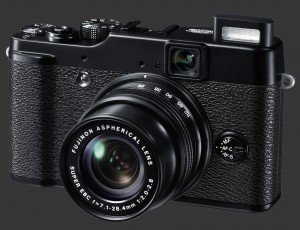
A bright lens allows premium models to shoot a lower ISO sensitivities than ordinary fixed-lens cameras. This compensates for the intrinsic low image quality of small sensors used in most such cameras. However, sensor sizes vary widely from the same small 1/1.7" ones used in ultra-compacts to full-frame ones and every size in between.
To keep the camera relatively compact, ones with large sensors rarely zoom. The Sony Cybershot DSC-RX1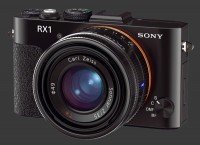
Sony Cybershot DSC-RX1 is the only full-frame mode while several 1.5X crop models exist. The Canon Powershot G1 X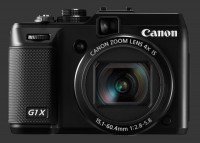
Canon Powershot G1 X and Sony Cybershot DSC-RX100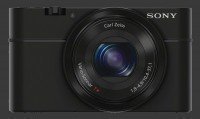
Sony Cybershot DSC-RX100 follow in terms of sensor size, while most remaining models use small sensors like those found in compact digital cameras.
Premium digital cameras are primary aimed at photographers who like to keep manual-controls at hand while away from their heavy gear. With their recent adoption of large sensors, premium cameras are competing for buyers looking for high image quality in a compact body without the hassles - or benefits - of interchangeable lenses.

 Equipment Articles
Please Support Neocamera
All information on Neocamera is provided free of charge yet running this website is a huge endeavor. Purchases made via affiliate links found throughout the site help keep it running and up-to-date. There is no additional cost to you, so please consider buying via these links to our affilates:




Thank you for your support!


Medium-Format Digital Camera
A medium-format camera is not a medium-size camera. It is in fact quite large since it has a sensor which is larger than a full-frame. The name comes from film sizes where medium-format films are larger are largerUsually between at 6x4.5cm and 6x17cm than 35mm films.
Just like cameras accepting lenses designed for 35mm film cameras, medium-format digital cameras have a crop-factor. Since there are several sizes of medium-format films, the FLM depends on the medium-format being compared.
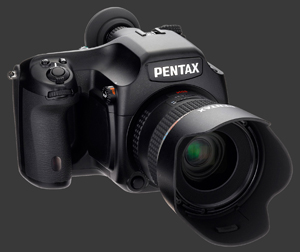
There are medium-format digital cameras or backs. A back is inserted at the back of a medium-format film camera. Instead, a digital medium-format camera resembles an oversized SLR, complete with reflex viewfinder.
These are presently very expensive cameras designed for use by photography professionals. Lenses for 35mm film cameras won't work on these cameras. Medium-format digital cameras can boast over 80 megapixels while maintaining low image-noise, making them suitable for very large imagery.
Updates
2026.07.31

ZY Optics Pittura 30mm F/2.4 Medium-Format Lens Review
The ZY Optics Pittura 30mm F/2.4 is a manual lens designed exclusively for Medium-Format Digital Cameras. This fast prime lens captures a wide field-of-view, equivalent to a 24mm on Full-Frame. It is am affordable alternative to first-part GFX and XCD lenses.
2026.07.26

Fujifilm GFX100S II Review
Express review of the Fujifilm GFX100S II. This 102 MP Medium-Format Mirrorless Digital Camera packs an 5-Axis 8-Stop IBIS and a 5.8 MP 0.5" EVF showing 100% coverage at an extra-large 0.84X magnification. It is a more compact version of the flagship GFX100 II. This review covers exactly how these camera compare.
2026.07.14

Sony Alpha A7R VI Review
Extended In-Depth Review of the Sony Alpha A7R VI. This flagship Full-Frame Mirrorless Digital Camera combines ultra-high 67 MP resolution with very fast 30 FPS continuous shooting. It packs a 5-axis 8½-stop IBIS mechanism and an ultra-sensitive 759-Point Phase-Detect AF system. Its incredibly sharp 9.4 MP 0.64" EVF has a huge 0.9X magnification, 100% coverage, 10-bit HDR and 100% DCI-P3 color-space. Captures 8K video at 30 FPS or 4K video at 120 FPS.
2026.05.21

Laowa 4.5-10mm F/2.8 Fisheye Zoom Lens Review
In-depth review of the Venus Optics Laowa 4.5-10mm F/2.8 Fisheye Zoom Lens. This lens zooms from a circular to rectangular fisheye with an 180° viewing angle. This review analyses its optical quality, construction and handling.
2026.04.13

Laowa 17mm F/4 Zero-D Shift Review
In-Depth review of the Venus Optics Laowa 17mm F/4 Zero-D Shift Lens. This ultra-wide Shift lens is specifically designed for Mirrorless Digital Cameras and is available in 4 Full-Frame mounts plus 2 Medium-Format ones.
2025.11.13

Best Gifts for Photographers in 2025 by Budget
The annual Neocamera Photography Gift Guide updated to 2025. Find great gifts for photographers with any price budget.
2025.07.07

Stellar Photo Recovery Review
Review of Stellar Photo Recovery V12. This Windows and MacOS software can recover photos and videos in a huge number of formats from memory cards, USB drives, SSDs and HHDs.
2025.05.14

Huion Kamvas 13 Gen 3 Review
In-Depth review of the Huion Kamvas 13 Gen 3 Pen Display Tablet for photographers and graphic artists.
2025.01.18

Fujifilm GFX 2025 Lens Roundup
Lens Review roundup of Fujifilm GFX Medium-Format lenses. Quality, performance and handling of the GF20-35mm F/4R WR, GF30mm F/3.5 Tilt-Shift and the GF55mm F/1.7.
2024.11.18

Best 2024 Photography Gifts for Every Budget
Great gifts for photographers and photo enthusiasts selected for every budget among the best products of 2024.
2024.08.07

Eye Protection Tips for Professional Photographers
The four main considerations for professional photographers regarding eyewear.
2024.07.14

Fujifilm X100VI Review
Flagship fixed-lens compact digital camera with a 40 MP sensor and Image-Stabilization, a first for the series. Retro design featuring dual control-dials, plus direct ISO, Shutter-Speed and EC dials. Its hybrid viewfinder can switch between EVF and OVF mode.
2026.07.31
2026.07.26
2026.07.14
2026.05.21
2026.04.13
2025.11.13
2025.07.07
2025.05.14
2025.01.18
2024.11.18
2024.08.07
2024.07.14
Camera Bag


Your camera bag is empty. To add a camera or lens click on the star next to its name.
Your camera bag is empty.
Add cameras or lenses by clicking on the star next to their name.
NEWS
2026.08.10

Peak Design Launches City Line Bags
Bag
2026.08.04

Sony Launches Light Super-Telephoto Full-Frame Zoom Lens
Lens
2026.07.31
Venus Optics Creates Two Parfocal Ultra-Macro Lens
Lens
2026.07.31
ZY Optics Pittura 30mm F/2.4 Medium-Format Lens Launch and Review
Lens ○ Review
2026.07.26

Fujifilm GFX100S II Review Published
Digital Camera ○ Review
2026.07.14
Sony Alpha A7R VI Review Published
Digital Camera
2026.07.09
Sony Unveils 5th Generation RX10
Digital Camera
2026.05.13
Sony Levels Up 6th Generation Alpha A7R
Digital Camera
2026.05.13
Canon Launches First Full-Frame Video Mirrorless
Digital Camera
2026.05.12
Panasonic Finally Launches LX100 II Successor
Digital Camera
2026.03.24
Panasonic Launches ZS300 Compact Ultra-Zoom
Digital Camera
2026.03.10
Venus Optics Unveils Ultra Wide Perspective Control Lens Duo
Lens

