Camera Basics
 Camera Choosing
 Camera Models
 Camera Buying
 DSLR Buying

Nikon D7000 Review
 16 Megapixels
 Single Lens Reflex
 High ISO: ISO 6400 or more is available at full-resolution.
 Level: Measures camera tilt and helps to keep the horizon level.
 Continuous Drive
 Full 1080p HD Video: 1920 x 1080 resolution or more but less than 4K.
 Manual Controls: Both fully-manual (M) and semi-automatic modes (T and V).
 Custom White-Balance: Specifies exactly what should be white to the camera.
 Action Photography: Shutter speeds of 1/1500 or more.
 Night Photography: Reaches shutter-speeds longer than 4 seconds.
 Hotshoe: Allows external flash units to be attached.
 Spot Metering
 Depth-Of-Field Preview: Improve perception of DOF before shooting.
 Weatherproof - Seals protect from dust, humidity and light splashing.
 Accepts Secure Digital Extended Capacity (SDXC), SDHC and SD memory.
 Neocamera detailed review
 Discontinued: No longer produced by the manufacturer. May still be in stock or found used.
 1 - Capability2 - Usability3 - Performance
Nikon D7000 Introduction
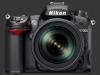

The Nikon D7000 boasts professional camera features in an advanced cropped-sensor DSLR using a state-of-the-art 16 megapixels CMOS sensor. This sensor covers an ISO 100 to 25600 sensitivity range while shooting continuously at 6 FPS or capturing full 1080p HD video. The durable magnesium body of the Nikon D7000 includes a large 100% coverage viewfinder and weather-seals against dust and moisture.
This digital camera is designed for efficiency with dual control-dials and over two dozen direct controls. The D7000 also emphasizes video as one of its class-leading capabilities with a sophisticated full-time autofocus system, external stereo sound input and video manual controls.
This review takes a close look at the Nikon D7000 in terms of features, ergonomics, usability, performance, image quality and unique photographic controls.
Nikon D7000 Key Features
Sensor
- 16 Megapixels CMOS sensor
- 1.5X crop-factor, Nikon DX
- ISO 100-25600
- Customizable Auto ISO
- Built-in Dust-Reduction
- JPEG, RAW or JPEG+RAW Output
- 1920x1080 @ 24 FPS 16:9 HD Video
Exposure
- PASM exposure modes
- 1/8000s-30s Selectable shutter-speed
- Bulb and Timed mode up to 30 minsRequires optional remote
- Exposure-Compensation, ±5 EV, 1/2 or 1/3 EV steps
- Flash-Compensation, -3...+1, 1/2 or 1/3 EV steps
- Matrix (Multi-Segment), Center-Weighed, Average & Spot metering
- AEB, 2-3 Frames, ±2 EV, 1/3 or 1/2 EV steps
- AE, AE & Flash, Flash, WB, ADL bracketing
- ½ or 1/3 EV Exposure steps
- Exposure fine-tuning, ±1 EV, 1/6 EV steps
Focus & Drive
- 39-Point autofocus, 9 cross-type
- Single-Point, Dynamic-Area or Auto focus-point
- Single-Shot, Continuous or Automatic focus-drive
- Contrast-detect AF for Live-View and video
- Face-Detect & Tracking Live-View autofocus
- Optional AF-Assist lamp
- 6 FPS Continuous Drive, Max 100 JPEG or 10 RAW
- Quick-shutter with delayed mirror-return
- Customizable Self-Timer, 1-9 Shots, 2-20s Start Delay, ½-3s Interval
- Dual IR receivers for remote trigger
- Mirror-Up and Exposure-Delay
- Multiple-Exposure, 2-3 shots, optional automatic gain
- Internal-Timer, 1-9 shots, 1-999 times, 1s-24h interval
- Optional Autofocus Fine-Tuning
Images Parameters
- Automatic, Preset, Kelvin and Custom white-balance
- White-Balance fine-tuning, 2-axis, 13-steps
- 6 Built-In Picture Styles
- Automatic or Manual Sharpness, 10 steps
- Automatic or Manual Contrast, 7 steps
- Automatic or Manual Saturation, 7 steps
- Manually Adjustable Hue, 7 steps
- Manually Adjustable Tone-Curve, 3 levels
- Optional High-ISO Noise Reduction, 3 levels
- Optional Long Shutter Noise Reduction
- Optional In-camera Distortion-Correction
- Optional Active D-Lighting (ADL), 4 levels
Controls
- Dual control-dials
- Combined configurable AE-L/AF-L button
- Optional Easy ISO or EC control
- Independent AEB button
- Modal exposure-mode dial
- Modal drive-mode dial
- Customizable Function button
- Customizable DOF-Preview button
- Direct Video-Recording button
- Live-View trigger
- Focus-Point lock
Viewfinder & Displays
- 100% Coverage viewfinder, 0.95X magnification
- 3" LCD, 920K Pixels
- Illuminated top LCD status display
- Editable status display on rear LCD
- Single-Axis Digital-Level
- OVF DOF-Preview
- Optional OVF grid
Body & Construction
- Nikon lens mount
- Weather-sealed, resistant to dust and moisture
- Durable magnesium frame
- Metal tripod mount
- Built-in pop-up flash (GN 13)
- Hot-Shoe for external lighting
- Stereo sound-input mini-jack
- 1080i HDMI output
- Dual SDXC memory card slots
- Proprietary Lithium-Ion battery
- Connector for optional GPS unit
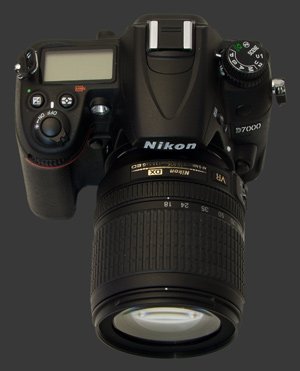
Nikon D7000 Suitability - What is it good for?
As an advanced DSLR, the Nikon D7000 is suitable for all types of photographic subjects. Its Nikon lens mount accepts lenses with built-in autofocus motors and those using body-driven autofocus. This gives it access to all modern Nikkor lenses. Given that Nikon and Canon produce more lenses than all other camera manufacturers and also have the most third-party lenses built for them, lens flexibility for the D7000 is top-notch.
The D7000 is particularly well suited for low-light photography, both hand-held and tripod-supported. Its high-ISO range means it can shoot in lower light compared to previous-generation cropped-sensor DSLRs without using a tripod. Choosing a bright or stabilized lens greatly helps too. From a tripod, metered exposures up to 30 seconds combined with high-ISO sensitivities lets it capture very dark scenes. This can be extended to capture star-trails and moonlit scenes using Bulb or Timed exposure modes. Note that Timed exposures of up to 30 minutes require an optional remote, which is also recommended for all long exposures.
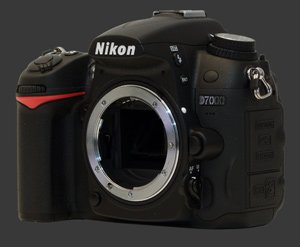
Action photography is well covered by this Nikon. The top shutter-speed of 1/8000s is as fast as DSLRs reach, while the speedy 39-point AF system is capable of tracking action using distance and color information as a subject moves across the frame. The continuous drive of the D7000 has a maximum shooting rate of 6 FPS. This is relatively fast but behind the older D300S and a few higher-end models. Advertised buffer-depth of 100 is misleading since at 6 FPS only a maximum of 15 JPEG or 10 RAW files can be captured. Still, when action can be anticipated within a 2-3 second window, the D7000 has a good chance of capturing the perfect moment.
Studio work requires the use of external lighting, which the D7000 supports via its hot-shoe. There is no Sync-Port as on the D300S but the advent of wireless flash-triggers, sold by third-parties, makes working with external lighting much more convenient. There is no need to worry about tripping cables and making sure they are long enough. The D7000 is also compatible with Nikon's own Creative Lighting System (CLS).
Street photography is possible although, like most DSLR cameras, the D7000 does not afford much discretion due to its size. Still, this very quick and responsive camera can take the shot and move-on without much fuss. All types of still-subject photography such as landscape and architecture are extremely well handled by the Nikon D7000 with a suitable choice of lens.
Nikon D7000 Capability - What can it do?
As the feature list in the introductions shows, the Nikon D7000 has all features expected from a modern DSLR. Since we have described all those features in plenty of reviews already, only things over the minimum or usual functionality is described in this part of the review.
The Nikon D7000 has a 3-way power-switch. Two positions are the usual On and Off choices. The third position is spring-loaded and triggers illumination of the top status LCD. Optionally, the status LCD can be permanently illuminated while the camera is On. Even when the camera is off, the status LCD nicely indicates which card is inserted and how much space is available in the first occupied slot.
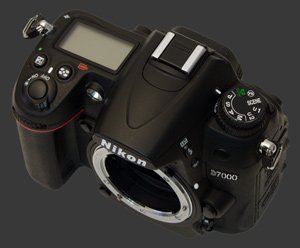
The mode-dial has the usual PASM modes plus five additional positions. The Auto position is similar to P mode except that it enables Auto ISO and Auto Flash while disabling EC, Metering choices, WB and FC. In this mode it is possible to set the flash to Forced-Off and to set the ISO manually. Flash-Off mode is the same as Auto except that the flash never fires. The next position is SCENE which lets the camera use one of 20 scene modes. The specific scene mode is selected by rotating the rear control-dial. The final two positions are for User-Defined modes.
This DSLR offers a complete set of drive modes, most of them fairly obvious. There are two continuous ones: CL and CH. CH shoots at 6 FPS until the memory buffer gets full. CL can be set to between 1 and 5 FPS. The only unusual mode is Q which stands for Quiet Shutter. It works by moving the mirror up and down very slowly to reduce noise made by the camera. It also does not return the mirror to its up-position until the shutter is released. This may be useful in times when the camera sound is distracting.
Interval shooting is set separately from drive modes. Nikon's implementation is the most sophisticated we have seen so far. A start time can be specified, as well as the number of intervals and number of shots to take at each interval. Combined with bracketing, this can be used to even create an HDR time-lapse. The interval can be between 1s and 24h. The number of intervals between 1 and 999, while between 1 and 9 shots can be taken at each interval.
Metering patterns are chosen by a top-mounted button used with the rear control-dial. There are three choices: Matrix, Spot and Center-Weighed/Average. Matrix is Nikon's name for Multi-Segment metering and Spot is, well, Spot metering. Depending on a configuration option, the third choice activates Average metering or Center-Weighed. The same option lets the camera use one of four sizes6mm, 8mm, 10mm or 13mm for the central-portion.
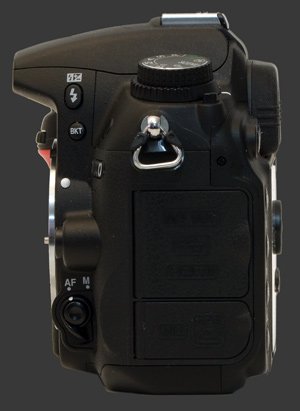
The combined AE-L/AF-L button is customizable:
- AE/AF Lock - Locks both auto-exposure and autofocus.
- AE Lock - Locks auto-exposure only.
- AF Lock - Locks autofocus only.
- AE Lock and Hold - Locks auto-exposure and keeps it locked until pressed again. This is very useful when taking multiple shots for stitching panoramas.
- AF-On - Triggers autofocus.
- FV Lock - Locks computed flash power.
Bracketing can be enabled for 2 or 3 frames with steps up to ±2 EV. A configuration option controls if flash power is adjusted for the bracket or if virtual bracketing for WB or ADL is performed instead. For WB bracketing, there are 3 step sizes. For WB, only one photo is taken but is saved two or three times with different white-balance fine-tuning.
ISO sensitivity goes from 100 to 25600, although 6400 is considered the standard maximum. To distinguish the highest ISO settings, they are labeled Hi 0.5, Hi 1 or Hi 2. When using these extended ISO settings, the Nikon D7000 does not store ISO information correctly in EXIF data of image files. Auto ISO in the standard PASM exposure modes, works differently than on other brands of DSLRs. The user can configure a maximum sensitivity and minimum shutter-speed. The D7000 then always adjusts the chosen ISO within the permitted range to obtain at least the specified shutter-speed.
White-balance options are plentiful. There are 2 types of Automatic WB. One tries to correct everything, the other leaves warm lighting intact. There are 6 presets and 5 custom white-balance memories. There is also the option to choose WB by color-temperature in Kelvin degrees.

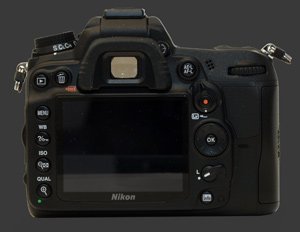
This camera features Nikon's Active D-Lighting image processing technology which lightens up dark areas of images to bring out details. There are 4 levels of ADL which differ by how much shadows get boosted. ADL can be manually or automatically set to one of those levels or turned off entirely. In order to do so, the D7000 also adjusts exposure between levels. This causes ADL settings to indirectly affect RAW capture.
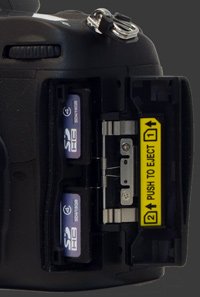 There are two memory-slots on the D7000, both accepting SDXC, SDHC and SD cards under the same weathersealed door. This is such a rare feature that it makes the camera seem professional just for having it! This digital cameras makes excellent use of both slots, offering several modes of operation:
- Overflow: When one card fills up, start filling the other one. May help buying cheaper cards.
- Backup: Duplicate everything to both cards, ideally using cards of the same size and speed. This is the professional choice.
- Format-Separation: For RAW+JPEG shooters, RAW files stored in Slot 1, JPEG images in Slot 2.
Additionally, videos can be forcibly stored in Slot 2 independently of how both cards manage images.
This DSLR can capture JPEG images or RAW files, using the NEF format. There are two options for NEF compression, one is lossless and the other is lossy while saving about 40% storage. RAW data can be saved using 12-bits or 14-bits per pixel. Obviously, the latter is more precise but consumes roughly 15% more space.
 |



 
|
 Next1 - Capability2 - Usability3 - Performance
Please Support Neocamera
All information on Neocamera is provided free of charge yet running this website is a huge endeavor. Purchases made via affiliate links found throughout the site help keep it running and up-to-date. There is no additional cost to you, so please consider buying via these links to our affilates:




Thank you for your support!


Nikon D7000 Highlights


 SLR digital camera
Sensor-Size: 24 x 16mm

Actual size when viewed at 100 DPI
| 16 Megapixels DSLR | ISO 100-25600 |
| Nikon F Mount 1.5X FLM | Shutter 1/8000-30s |
| 100% Coverage Large Viewfinder | Full manual controls, including Manual Focus |
| 1 Axis Digital Level | Custom white-balance with 2 axis fine-tuning |
| Weatherproof | Spot-Metering |
| Built-in Dust Reduction | Hot-Shoe |
| 6 FPS Drive, 100 Images | Stereo audio input |
| 1920x1080 @ 24 FPS Video Recording | Lithium-Ion Battery |
| 3" LCD 920K Pixels | Secure Digital Extended Capacity x 2 |
Camera Bag


Your camera bag is empty. To add a camera or lens click on the star next to its name.
Your camera bag is empty.
Add cameras or lenses by clicking on the star next to their name.
Updates
2025.11.13

Best Gifts for Photographers in 2025 by Budget
The annual Neocamera Photography Gift Guide updated to 2025. Find great gifts for photographers with any price budget.
2025.07.07

Stellar Photo Recovery Review
Review of Stellar Photo Recovery V12. This Windows and MacOS software can recover photos and videos in a huge number of formats from memory cards, USB drives, SSDs and HHDs.
2025.05.14

Huion Kamvas 13 Gen 3 Review
In-Depth review of the Huion Kamvas 13 Gen 3 Pen Display Tablet for photographers and graphic artists.
2025.01.18

Fujifilm GFX 2025 Lens Roundup
Lens Review roundup of Fujifilm GFX Medium-Format lenses. Quality, performance and handling of the GF20-35mm F/4R WR, GF30mm F/3.5 Tilt-Shift and the GF55mm F/1.7.
2024.11.18

Best 2024 Photography Gifts for Every Budget
Great gifts for photographers and photo enthusiasts selected for every budget among the best products of 2024.
2024.08.07

Eye Protection Tips for Professional Photographers
The four main considerations for professional photographers regarding eyewear.
2024.07.14

Fujifilm X100VI Review
Flagship fixed-lens compact digital camera with a 40 MP sensor and Image-Stabilization, a first for the series. Retro design featuring dual control-dials, plus direct ISO, Shutter-Speed and EC dials. Its hybrid viewfinder can switch between EVF and OVF mode.
2024.05.09

Fujifilm GFX100 II Review
Flagship 102 Megapixels Medium-Format Mirrorless Digital Camera with 8-Stop 5-Axis IBIS, 8 FPS Drive, 8K Video and 400 MP Super-Resolution capture in a weatherproof and freezeproof body with dual control-dials and dual memory-card slots.
2024.04.03

Fujifilm X-T5 Review
Newest Fujifilm flagship boasting a 40 MP APS-C sensor, 5-axis IBIS with 7-stop efficiency, 15 FPS continuous drive, 6.2K Video capture, dual control-dials and dual SDXC UHS-II slots in a sturdy weatherproof and freezeproof body.
2023.11.20

Best Digital Cameras of 2023
Find out which are the Best Digital Cameras of 2023. All the new Mirrorless Digital Cameras from entry-level to high-end professional.
2023.07.10

Fujifilm X-H2 Review
40 Megapixels APS-C Hybrid Mirrorless Digital Camera with 7-stop IBIS. Fastest shutter ever and 8K video capture. Large builtin EVF with 0.8X magnification and 5.8 MP, plus an Eye-Start Sensor. Packed with features and large number of controls in a weatherproof and freezeproof body.
2023.05.07

Sony FE 20-70mm F/4G Review
Review of the unique Sony FE 20-70mm F/4G lens. The optical zoom of this lens spans ultra-wide-angle and medium focal-length coverage, making it one of the most versatile Full-Frame lenses on the market.
2025.11.13
2025.07.07
2025.05.14
2025.01.18
2024.11.18
2024.08.07
2024.07.14
2024.05.09
2024.04.03
2023.11.20
2023.07.10
2023.05.07