



 Camera Basics
 Camera Choosing
 Camera Models
 Camera Buying
 DSLR Buying
Icon Glossary
 |
Digital SLR cameras are indicates by this icon. See the DLSR Basics page for more what this implies. |  |
A camera uses an electronic viewfinder is marked with this icon. SLR cameras never have EVFs. |
 |
Signifies that a fixed-lens digital camera has more than 10X optical zoom. Some have 20X or more. Most ultra-zoom digital cameras have an EVF. |  |
Signifies that a camera supports an ISO sensitivity of 6400 or more at its full-resolution without up-sampling. This is knows as high-ISO capability. |
 |
Indicates a camera which has full manual controls including full-manual exposure (M), aperture-priority (A) and shutter-priority (S). Manual focus and various metering modes are also commonly included. |  |
Indicates a custom white-balance function. This can greatly improve color accuracy, specially under mixed and artificial light sources. Otherwise, one must rely on automatic or preset white-balance options. |
 |
A camera which can capture continuously at least 3 images at 2 FPS while a viewfinder or LCD preview remains usable is marked by this icon. |  |
This icon indicates that an external flash can be attached to a camera. This can be done via a hot-shoe or sync-port (PC). |
 |
Video captured between VGA and HD resolutions. This is at least 640x480 but less than 1280x720. |  |
Indicates a camera usable for sports-photography. Requires shutter-speeds faster than 1/1500s. |
 |
HD video captured at 1280x720 or more but less than 1920x1080. This is the basic HDTV resolution. |  |
HD video captured at 1920x1080 or more. This is the maximum HDTV resolution, often referred to as Full HD. |
 |
Ultra-HD video capture. This is 4X the resolution of 1080p or 3840x2160 at least. A wider version with 4096x2160 also exits and is called Cinema 4K. | ||
 |
Indicates a camera usable for night-photography. This requires shutter-speeds longer than 4 seconds. |  |
Cameras which can use both types of Compact Flash memory cards are indicated with this icon. Microdrives are supported too. Note that some cameras do not accept cards over 2 GB regardless of their type. |
 |
Cameras which can use AA batteries for power are marked by this icon. This is far more flexible than generally expensive proprietary solutions. |  |
A camera which supports Secure Digital memory cards directly is marked with this icon. SDHC cards cannot be used with these cameras, unless a special firmware update is available and successfully installed. |
 |
Indicates a camera accepts Compact Flash Type I memory cards but not the thicker Type II cards such as Microdrives. |  |
A camera which supports Secure Digital High Capacity memory cards directly is marked with this icon. Cameras which support SDHC cards also support SD cards which are the same size and shape. |
 |
Indicates a camera accepts xD cards. These cards are proprietary to Fuji and Olympus but are also manufactured by other flash vendors. |  |
A camera which supports Secure Digital Extended Capacity memory cards directly is marked with this icon. Cameras which support SDXC cards also support SDHC and SD cards which are the same size and shape. |
 |
Indicates a camera accepts Memory Stick Duo cards but not larger Memory Stick cards. These cards are proprietary to Sony but also made by other vendors. |  |
Indicates a camera accept proprietary Sony Memory Sticks. These are the larger type of cards by Sony. |
 |
A camera which supports Micro Secure Digital High Capacity memory cards directly is marked with this icon. Cameras which support Micro SDHC cards also support Micro SD cards which are the same size and shape. |  |
A camera which supports Micro Secure Digital Extended Capacity memory cards directly is marked with this icon. Cameras which support Micro SDXC cards also support Micro SDHC and Micro SD cards which are the same size and shape. |
 |
Indicates a camera accepts XQD cards. |  |
Indicates a camera accepts CFast cards. |
 |
Indicates a camera accepts CFExpress cards. These are now known as Type B cards which use the same form-factor as XQD. |  |
Indicates a camera accepts CFExpress Type A cards. Small CF Express and resemble a more rectangular SD card. |
 |
Indicates a camera accepts CFExpress Type B cards. Medium CF Express cards using the XQD form-factor. |  |
Indicates a camera accepts CFExpress Type C cards. Large memory cards offering extra space and faster maximum transfer speeds. |
 |
Neocamera's full-reviews are indicated by this icon. The reviews are focused on usability, suitability and quality of images produced. |  |
Cameras that have been used at Neocamera, but not long enough for a full-review, are marked with this icon. |
 |
Camera has not been rated yet. |  |
Poor cameras tend to produce unacceptably flawed images for the resolutions of their sensors. Performance and handling may also be lacking. |
 |
Average cameras produce noticeably flawed but reasonable pictures and usually compromise on performance or handling. |  |
A good camera has a few flaws but no major problems with image quality. This cameras also handles reasonably well. |
 |
An Excellent camera is shows exceptional image quality for its class. This does not mean it is perfect, or that a lower rating camera may not be more suitable. |  |
Excellent Plus announces image quality that is a significant step above cameras rated Excellent the its class, being Fixed Lens, Mirrorless, Cropped DSLR or a Full-Frame DSLR. |
 |
Marks a camera or lens which has been discontinued by its manufacturer. It may still be available in stores while quantities last and on the used market. |  |
GPS is built-in position information is embedded with each photo. |
 |
Built-in stabilization allows pictures to be taken at lower shutter speeds than would normally be possible while hand-holding a camera. It does so by moving the sensor or a lens element to compensate for camera movements. |  |
Depth-of-field preview improves the accuracy of our perception of depth-of-field through the viewfinder by stopping down the lens aperture to the one that will be used to capture the image. |
 |
Dust-reduction is a mechanism to reduce the dust accumulated on a camera sensor. Only DSLR cameras need this feature since their sensor can be exposed to dust while changing lenses. |  |
Spot metering evaluates exposure using only a small spot. It is used to determine exposure by choosing what to picture as a mid-tone. |
 |
Weather-proof cameras are sealed to keep away dust, humidity and light splashing. |  |
Water-proof cameras are capable of being submerged under water without the need for an optional casing. Water-proof cameras are subject to specific limits of depth and duration. |
 |
Unlimited slow continuous drive measn the camera can shoot at less than 5 FPS, but at least 2 FPS, until the memory card fills up, regardless of its size. |  |
Unlimited fast continuous drive means the camera can sustain 5 FPS or more, until the memory card fills up, regardless of its size. |
 |
Long duraction slow-speed continuous drive means that the camera can shoot at less than 5 FPS, but at least 2 FPS, for at least 5 seconds. |  |
Long duration high-speed continuous drive means that the camera can sustain 5 FPS or more for at least 5 seconds. |
 |
Short duraction slow-speed continuous drive means that the camera can shoot at less than 5 FPS, but at least 2 FPS, for less than 5 seconds. |  |
Short duration high-speed continuous drive means that the camera can sustain 5 FPS or more for less than 5 seconds. |
 |
An extra-large viewfinder (effective size of 0.7 or more) with less than 100% frame coverage. |  |
An extra-large viewfinder (effective size of 0.7 or more) with 100% frame coverage. |
 |
A large viewfinder (effective size between 0.6 to 0.7 or more) with less than 100% frame coverage. |  |
A large viewfinder (effective size between 0.6 to 0.7) with 100% frame coverage. |
 |
A medium viewfinder (effective size between 0.5 to 0.6 or more) with less than 100% frame coverage. |  |
A medium viewfinder (effective size between 0.5 to 0.6 or more) with 100% frame coverage. |
 |
A small viewfinder (effective size 0.5 or less) with less than 100% frame coverage. |  |
DSLR featuring true live-view. Must be exposure-priority display with 100% coverage, white-balance previewed and capable of autofocus. |
 |
Level that measures camera tilt and helps to keep the horizon level. |  |
Automatic level system which corrects for some degree of tilt to keep the horizon level. |
 |
A digital camera, as opposed to a lens. |  |
A stereoscopic camera or lens which gives in impression of 3D. |
 |
A lens, as opposed to a camera. Mountable on a compatible camera such as a DSLR or ILC. |  |
Optical Image Stabilization built into a lens. Some cameras provide this in the body instead which benefits all lenses. |
 |
A lens that zooms optically by changing its focal-length. Can be constant-aperture which means that the widest aperture remains the same accross the zoom range. |  |
A lens that does not zoom. It has a fixed focal length. |
 |
Normal lenses are rectilinear, the are designed to show straight lines as straight lines. |  |
A fisheye lens renders a view where straight lines appear curved except if they pass through the center. Can produce a rectangular or circular image. |
 |
Lens capable of macro photography with a reproduction ratio of at least 1:1. |  |
A lens that must be focused manually. It does not support autofocus, even on cameras that do. |
 |
A lens that can be focused automatically by the camera. |  |
A lens that supports autofocus and can be focused manually at any time. |
 |
A thread on the lens supports front-mounted screw-on filters. |  |
A lens that does not have a threaded front. It cannot support screw-on filters. |
|
Normal lenses are rectilinear, the are designed to show straight lines as straight lines. | |
A fisheye lens renders a view where straight lines appear curved except if they pass through the center. Can produce a rectangular or circular image. |
|
Lens capable of macro photography with a reproduction ratio of at least 1:1. |  |
Lens designed for cinematography. These lenses have gears to mechanically control focus, aperture and focal-length, when applicable. |
 10 Megapixels 10 Megapixels  100 Megapixels 100 Megapixels  102 Megapixels 102 Megapixels  11 Megapixels 11 Megapixels  12 Megapixels 12 Megapixels  13 Megapixels 13 Megapixels  14 Megapixels 14 Megapixels  15 Megapixels 15 Megapixels  16 Megapixels 16 Megapixels  17 Megapixels 17 Megapixels  18 Megapixels 18 Megapixels  19 Megapixels 19 Megapixels  20 Megapixels 20 Megapixels  21 Megapixels 21 Megapixels  22 Megapixels 22 Megapixels  23 Megapixels 23 Megapixels  24 Megapixels 24 Megapixels  25 Megapixels 25 Megapixels  26 Megapixels 26 Megapixels  29 Megapixels 29 Megapixels  3 Megapixels 3 Megapixels  30 Megapixels 30 Megapixels  31 Megapixels 31 Megapixels  32 Megapixels 32 Megapixels  33 Megapixels 33 Megapixels  36 Megapixels 36 Megapixels  37 Megapixels 37 Megapixels  4 Megapixels 4 Megapixels  40 Megapixels 40 Megapixels  42 Megapixels 42 Megapixels  44 Megapixels 44 Megapixels  45 Megapixels 45 Megapixels  46 Megapixels 46 Megapixels  47 Megapixels 47 Megapixels  48 Megapixels 48 Megapixels  5 Megapixels 5 Megapixels  50 Megapixels 50 Megapixels  51 Megapixels 51 Megapixels  6 Megapixels 6 Megapixels  60 Megapixels 60 Megapixels  61 Megapixels 61 Megapixels  62 Megapixels 62 Megapixels  64 Megapixels 64 Megapixels  7 Megapixels 7 Megapixels  8 Megapixels 8 Megapixels  9 Megapixels 9 Megapixels |
Indicates a camera with that number of megapixels. We round the number of effective megapixels to the nearest whole number. | ||
Please Support Neocamera
All information on Neocamera is provided free of charge yet running this website is a huge endeavor. Purchases made via affiliate links found throughout the site help keep it running and up-to-date. There is no additional cost to you, so please consider buying via these links to our affilates:




If you found any information on this site valuable and did not purchase via our affiliate links, please considering donating via PayPal:
Any amount will be greatly appreaciated. Thank you for your support!


Camera Bag


Your camera bag is empty. To add a camera or lens click on the star next to its name.
Your camera bag is empty.
Add cameras or lenses by clicking on the star next to their name.
New Cameras & Lenses
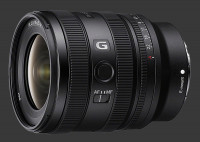
Sony FE 16-25mm F/2.8G
Weatherproof
Sony E Mount Zoom
2024-04-16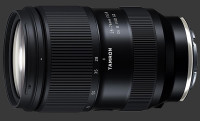
Tamron Di III 28-75mm F/2.8 VXD G2
Weatherproof
Nikon Z Mount Zoom
2024-03-28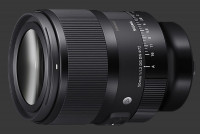
Sigma A 50mm F/1.2 DG DN
Weatherproof
Sony E Mount Prime Lens
2024-03-27Sigma A 50mm F/1.2 DG DN
Weatherproof
Leica L Mount Prime Lens
2024-03-27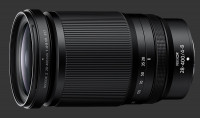
Nikkor Z 28-400mm F/4-8 VR
Stabilization & Weatherproof
Nikon Z Mount Zoom
2024-03-27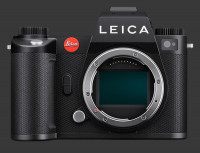
Leica SL3
60 Megapixels Mirrorless
Leica L Lens Mount
Built-in Stabilization
Weatherproof down to -10C
2024-03-07
Updates
2024.04.03

Fujifilm X-T5 Review
Newest Fujifilm flagship boasting a 40 MP APS-C sensor, 5-axis IBIS with 7-stop efficiency, 15 FPS continuous drive, 6.2K Video capture, dual control-dials and dual SDXC UHS-II slots in a sturdy weatherproof and freezeproof body.
2023.11.20

Best Digital Cameras of 2023
Find out which are the Best Digital Cameras of 2023. All the new Mirrorless Digital Cameras from entry-level to high-end professional.
2023.07.10

Fujifilm X-H2 Review
40 Megapixels APS-C Hybrid Mirrorless Digital Camera with 7-stop IBIS. Fastest shutter ever and 8K video capture. Large builtin EVF with 0.8X magnification and 5.8 MP, plus an Eye-Start Sensor. Packed with features and large number of controls in a weatherproof and freezeproof body.
2023.05.07

Sony FE 20-70mm F/4G Review
Review of the unique Sony FE 20-70mm F/4G lens. The optical zoom of this lens spans ultra-wide-angle and medium focal-length coverage, making it one of the most versatile Full-Frame lenses on the market.
2023.01.15

Huion Inspiroy Dial 2 Review
Review of the Huion Inspiroy Dial 2 tablet, a medium sized drawing surface with dual dials and customizable buttons. Connects via USB-C or Bluetooth 5.0 with Windows, Linux and Android support.
2022.12.08

How to Pack for a Photo Trip
Find out how to pack for a travel photography trip, carry your gear safely while meeting airline regulations.
2022.11.13

Best Digital Cameras of 2022
The best digital cameras of 2022. A short list of the most outstanding models in their respective categories. Choose one for yourself or as a gift.
2022.09.21

Pentax DA* 60-250mm F/4 SDM Review
Review of the Pentax DA* 60-250mm F/4 SDM, the constant-aperture telephoto zoom with the highest zoom-ratio on the market.
2022.09.20

Pentax DA* 50-135mm F/2.8 SDM Review
Review of the Pentax DA* 50-135mm F/2.8 SDM, the lightest professional telephoto zoom native to the K-mount.
2022.09.10

Pentax DA* 11-18mm F/2.8 DC AW Review
Review of the Pentax DA* 11-18mm F/2.8 DC AW, the widest professional ultra-wide zoom native to the K-mount.
2021.11.24

50 Gifts Under $50 For Photographers in 2021
50 Gifts photographers will love. All for under $50 USD. 2021 Edition.
2021.11.17

Best Digital Cameras for 2021
Neocamera shows which are the very best Digital Cameras for 2021 in every category: Mirrorless, DSLR, Premium Compact, Ultra-Zoom and Rugged.
2024.04.03
2023.11.20
2023.07.10
2023.05.07
2023.01.15
2022.12.08
2022.11.13
2022.09.21
2022.09.20
2022.09.10
2021.11.24
2021.11.17
NEWS
2024.04.24

Megadap Ultimate Canon EF to Nikon Z Adapter
2024.04.24

Sony Custom Grid License
Technology
2024.04.16

Sony Launches Bright Ultra-Wide Compact Zoom
Lens
2024.03.27
Sigma Ultra-Bright Normal Mirrorless Lens
Lens
2024.03.27
Nikon Launches Full-Frame Super-Zoom Lens
Lens
2024.03.20
New Lens Statistical Comparisons
2024.03.14
Fujifilm Brings New Features to Instax Series
Instant Camera
2024.03.07

Leica Launches SL3 Full-Frame Mirrorless
Digital Camera
2024.02.22
Panasonic Unveils Full-Frame Travel-Zoom Lens
Lens
2024.02.21
Sigma Reveals 2 Extreme Full-Frame Lenses
Lens
2024.02.21
Sony Reveals Bright Compact Full-Frame Zoom
Lens
2024.02.20
Venus Launches First Autofocus Lens
Lens

