



 Camera Basics
 Camera Choosing
 Camera Models
 Camera Buying
 DSLR Buying
Viewfinders
To the photographer, the viewfinder is the most visible part of a camera. Yet photographers barely want to notice it. What they are interested in is what they see through the viewfinder: their subject and sometimes a few unobtrusive indicators of the camera's status. Surprisingly, the viewfinder is one of the most controversial parts a modern camera. With the advent of digital cameras, the controversy has escalated.
To each their own
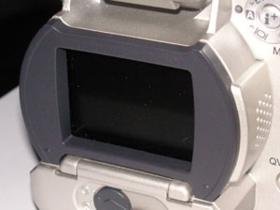
Practically all digital cameras sport an LCD (Liquid Crystal Display). For non-SLR digital cameras, it can be used to preview pictures taken and therefore serves the same purpose as a viewfinder. For several modern digital cameras, the LCD has become their only viewfinder. A growing number of digital cameras, particularly long-zoom and wide-angle cameras, use an EVF (Electronic Viewfinder) in addition to the camera's rear LCD. These miniature LCDs are the only eye level viewfinder alternatives for long zoom cameras. Just like their film counter-part, point and shoot digital cameras can have an optical-tunnel viewfinder. An optical tunnel viewfinder is a small tunnel going through the camera with a miniature lens which is fixed above or next to the camera's photographic lens. Finally, DSLR (Digital Single Lens Reflex) cameras use optical viewfinders which see through the lens using a pentaprism or porro finder just like their film SLR counterparts.
What you see is mostly what you get
The percentage of a picture that is seen through a viewfinder is called coverage. The closer the coverage is to 100% the better.
Just like a viewfinder, an LCD shows the subject being photographed. In fact, it shows what will make it into the final picture extremely well. LCDs get their information directly from the camera's sensor. As such, LCDs can easily have 100% coverage. With respect to coverage, EVFs behave exactly like LCDs, 100% coverage is easily obtainable.
Contrarily to LCDs, optical tunnel viewfinders show a different picture than the one that will be taken. This is due to the fact that an optical tunnel looks through a different lens than the one used to take the picture. The closer the subject is to the camera, the greater the difference between what is seen and what will be pictured. This is called parallax error. Even at a distance, the coverage of an optical tunnel varies between 60% and 85%, which is far from ideal.
DSLR camera viewfinders look through the photographic lens and therefore show part of what will be pictured with no parallax errors. Due to manufacturing constraints however, most DSLR viewfinders don't show the entire picture. Typical coverage of DSLR viewfinders is between 92%-95%.
Stay focused
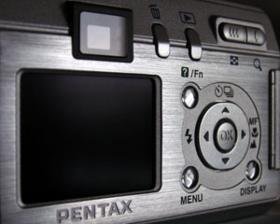
An LCD is a small display made up of a limited number of pixels; much less than the number of pixels that will be captured in a digital picture. This implies that even though LCDs can be quite large compared to a viewfinder, the amount of details they can show is limited. Of course, some LCDs are better than others. At 86,000 pixels, an LCD is very coarse, at 235,000 pixels it is much better, but this is still very far from what a camera's CCD can capture. This is where an LCD starts to fail the photographer, it cannot show the precise details that will be captured and more importantly it cannot show focus precisely.
Just like LCDs, EVFs can't show very fine details. On most prosumer cameras however, EVFs have much higher resolution than LCDs. This makes the problem less pronounced. Fuji, Kodak, Konica-Minolta, Nikon and Olympus each have several cameras with 220,000 to 311,000 pixels EVFs. The EVF champion however is the Konica-Minolta A2 at 922,000 pixels. This is equivalent to having a 0.44" TV right in front of your eye!
Optical tunnels do show details. They show all the details which our eyes can see. The only problem is that they don't show the details through the photographic lens. This means that what you see through an optical tunnel is not affected by changes to a camera's lens (except for zoom, which is simulated and causes parallax errors). In other words, you can't see the effect of focusing at all. Some optical tunnels even show everything blurry!
For visualizing focus, SLR cameras are the champions. They allow our eye to see through the photographic lens and pick up every slight change in focus. It turns out most SLR cameras default to keeping the aperture wide open until after the shutter is fully pressed. A larger aperture actually has a shallower depth of field (DOF) and therefore exaggerates the blurring outside the plane of focus. To see accurately what will be in focus, one must use the DOF-Preview function present on most modern DSLR and even some prosumer digital cameras.
 Next
Next Equipment Articles
Please Support Neocamera
All information on Neocamera is provided free of charge yet running this website is a huge endeavor. Purchases made via affiliate links found throughout the site help keep it running and up-to-date. There is no additional cost to you, so please consider buying via these links to our affilates:




If you found any information on this site valuable and did not purchase via our affiliate links, please considering donating via PayPal:
Any amount will be greatly appreaciated. Thank you for your support!


Updates
2024.04.03

Fujifilm X-T5 Review
Newest Fujifilm flagship boasting a 40 MP APS-C sensor, 5-axis IBIS with 7-stop efficiency, 15 FPS continuous drive, 6.2K Video capture, dual control-dials and dual SDXC UHS-II slots in a sturdy weatherproof and freezeproof body.
2023.11.20

Best Digital Cameras of 2023
Find out which are the Best Digital Cameras of 2023. All the new Mirrorless Digital Cameras from entry-level to high-end professional.
2023.07.10

Fujifilm X-H2 Review
40 Megapixels APS-C Hybrid Mirrorless Digital Camera with 7-stop IBIS. Fastest shutter ever and 8K video capture. Large builtin EVF with 0.8X magnification and 5.8 MP, plus an Eye-Start Sensor. Packed with features and large number of controls in a weatherproof and freezeproof body.
2023.05.07

Sony FE 20-70mm F/4G Review
Review of the unique Sony FE 20-70mm F/4G lens. The optical zoom of this lens spans ultra-wide-angle and medium focal-length coverage, making it one of the most versatile Full-Frame lenses on the market.
2023.01.15

Huion Inspiroy Dial 2 Review
Review of the Huion Inspiroy Dial 2 tablet, a medium sized drawing surface with dual dials and customizable buttons. Connects via USB-C or Bluetooth 5.0 with Windows, Linux and Android support.
2022.12.08

How to Pack for a Photo Trip
Find out how to pack for a travel photography trip, carry your gear safely while meeting airline regulations.
2022.11.13

Best Digital Cameras of 2022
The best digital cameras of 2022. A short list of the most outstanding models in their respective categories. Choose one for yourself or as a gift.
2022.09.21

Pentax DA* 60-250mm F/4 SDM Review
Review of the Pentax DA* 60-250mm F/4 SDM, the constant-aperture telephoto zoom with the highest zoom-ratio on the market.
2022.09.20

Pentax DA* 50-135mm F/2.8 SDM Review
Review of the Pentax DA* 50-135mm F/2.8 SDM, the lightest professional telephoto zoom native to the K-mount.
2022.09.10

Pentax DA* 11-18mm F/2.8 DC AW Review
Review of the Pentax DA* 11-18mm F/2.8 DC AW, the widest professional ultra-wide zoom native to the K-mount.
2021.11.24

50 Gifts Under $50 For Photographers in 2021
50 Gifts photographers will love. All for under $50 USD. 2021 Edition.
2021.11.17

Best Digital Cameras for 2021
Neocamera shows which are the very best Digital Cameras for 2021 in every category: Mirrorless, DSLR, Premium Compact, Ultra-Zoom and Rugged.
2024.04.03
2023.11.20
2023.07.10
2023.05.07
2023.01.15
2022.12.08
2022.11.13
2022.09.21
2022.09.20
2022.09.10
2021.11.24
2021.11.17
Camera Bag


Your camera bag is empty. To add a camera or lens click on the star next to its name.
Your camera bag is empty.
Add cameras or lenses by clicking on the star next to their name.
NEWS
2024.04.16

Sony Launches Bright Ultra-Wide Compact Zoom
Lens
2024.03.27
Sigma Ultra-Bright Normal Mirrorless Lens
Lens
2024.03.27
Nikon Launches Full-Frame Super-Zoom Lens
Lens
2024.03.20

New Lens Statistical Comparisons
2024.03.14

Fujifilm Brings New Features to Instax Series
Instant Camera
2024.03.07

Leica Launches SL3 Full-Frame Mirrorless
Digital Camera
2024.02.22
Panasonic Unveils Full-Frame Travel-Zoom Lens
Lens
2024.02.21
Sigma Reveals 2 Extreme Full-Frame Lenses
Lens
2024.02.21
Sony Reveals Bright Compact Full-Frame Zoom
Lens
2024.02.20
Venus Launches First Autofocus Lens
Lens
2024.02.20
Fujifilm Launches X100VI
Digital Camera
2024.01.16

Think Tank Launches Backlight Sprint Backpacks
Bag

